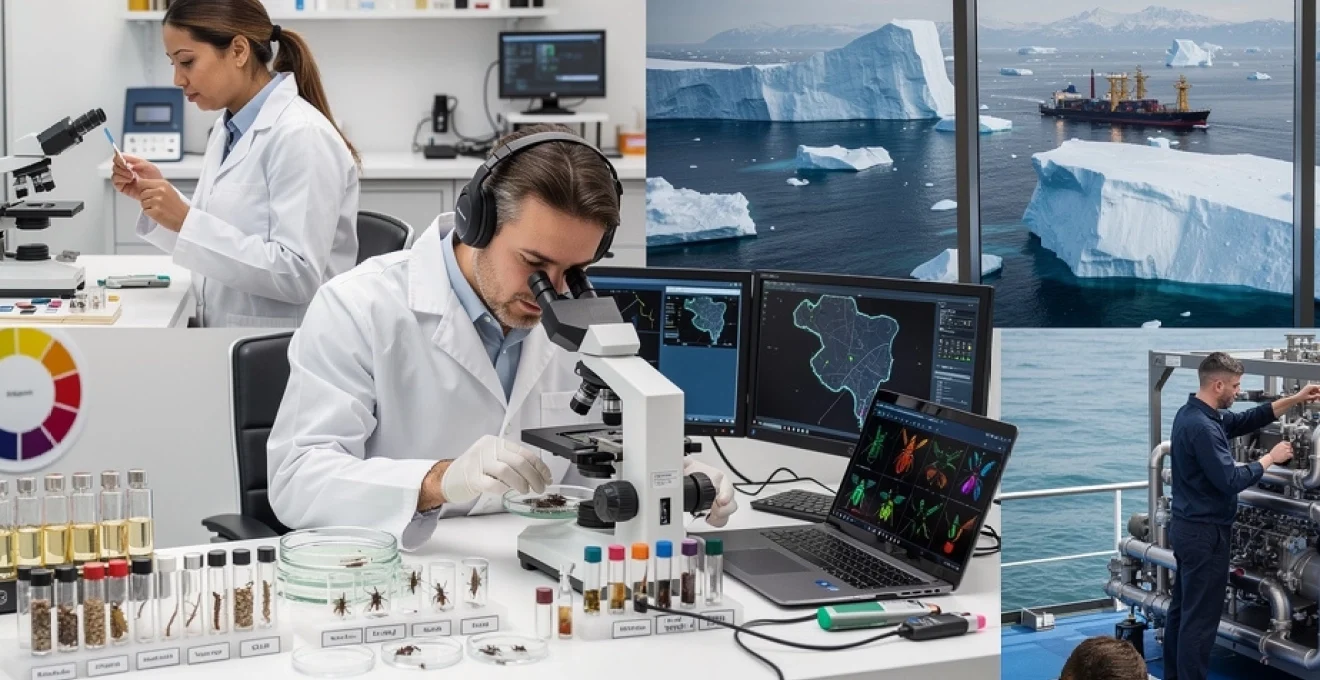
The modern economy harbours countless career paths that remain invisible to the general public, yet these specialised roles command impressive salaries and offer fascinating work environments. Whilst most people pursue traditional careers in teaching, medicine, or finance, a parallel universe of ultra-niche professions thrives beneath the surface of mainstream employment. These roles often require highly specific skill sets, unique training pathways, and sometimes a tolerance for unconventional working conditions. What unites them is their essential nature – despite their obscurity, industries depend entirely on these specialists to function properly. From forensic entomologists who analyse insect evidence at crime scenes to iceberg management operators protecting shipping lanes, these professionals occupy crucial positions within their respective sectors.
Many of these niche careers offer substantial financial rewards precisely because so few individuals possess the necessary expertise. The principle of supply and demand operates powerfully here: when only a handful of qualified practitioners exist globally, their services become extraordinarily valuable. Specialists in these fields frequently earn between £60,000 and £150,000 annually, with some exceeding these figures considerably. Beyond the financial incentives, these careers provide intellectual stimulation, job security, and the satisfaction of mastering a craft that few others can claim.
Forensic entomology: solving criminal cases through insect analysis
Forensic entomology represents one of the most scientifically rigorous yet publicly misunderstood specialisms within criminal investigation. These professionals apply their extensive knowledge of insect biology, particularly species that colonise human remains, to establish critical timelines in criminal cases. The discipline requires not only a comprehensive understanding of entomological science but also the ability to work closely with law enforcement agencies, maintain meticulous documentation standards, and present complex scientific findings in court proceedings. Currently, fewer than 30 practising forensic entomologists operate throughout the United Kingdom, making this one of the most exclusive specialisms within the forensic sciences.
The work demands exceptional attention to detail and an unflinching approach to disturbing scenes. Forensic entomologists frequently attend outdoor death scenes where they must collect specimens whilst preserving the integrity of the broader crime scene. They work in all weather conditions, often in remote locations, and must coordinate their activities with Scene of Crime Officers and forensic pathologists. The average case consultation fee ranges from £800 to £2,500, depending on complexity, with court testimony commanding additional fees of approximately £1,200 per day. Most forensic entomologists maintain academic positions at universities whilst operating consultancy practices, allowing them to combine teaching and research with practical casework.
Blow fly larvae development stages in Post-Mortem interval estimation
The cornerstone of forensic entomology involves understanding the predictable developmental stages of blow flies, particularly species within the Calliphoridae family. These insects typically arrive at remains within minutes to hours after death, making them extraordinarily reliable biological clocks. Forensic entomologists must identify the precise developmental stage – from egg through three larval instars, puparium, and adult emergence – and correlate this with accumulated degree hours based on ambient temperature data. This process requires sophisticated knowledge of thermal summation models and species-specific development rates under varying environmental conditions.
Different blow fly species exhibit distinct colonisation patterns and development rates, which forensic entomologists must account for when calculating post-mortem intervals. Lucilia sericata, the common green bottle fly, develops differently than Calliphora vicina, the bluebottle fly, particularly in cooler conditions. Specialists maintain extensive reference collections of local species and conduct ongoing research into development rates under controlled laboratory conditions. Accurate post-mortem interval estimation can narrow a death window to within 24-48 hours, information that proves crucial in either establishing or eliminating suspect alibis.
Calliphoridae species identification for geographic profiling
Beyond temporal information, forensic entomologists provide geographic insights through species identification. Certain blow fly species exhibit restricted geographic distributions or habitat preferences that can indicate whether remains have been moved post-mortem. For instance, discovering species typically found in rural woodland environments on remains located in an urban setting suggests body relocation. This geographic profiling capability extends investigative possibilities considerably, potentially identifying dump sites or transportation routes used by perpetrators.
Species identification requires sophisticated taxonomic knowledge and often necessitates
high‑magnification microscopy to examine minute anatomical differences in larval spiracles, bristles, and adult genitalia. In recent years, DNA barcoding has become more common, particularly when specimens are damaged or at early developmental stages that are difficult to distinguish morphologically. By combining classical taxonomy with molecular techniques, forensic entomologists can provide courts with robust, scientifically defensible evidence about where and when colonisation occurred. In complex cases involving multiple crime scenes, this level of precision can make the difference between a circumstantial narrative and a clearly supported investigative timeline.
Maggot mass temperature data collection at crime scenes
One of the lesser-known responsibilities of forensic entomologists involves measuring maggot mass temperature directly at the scene. Actively feeding larvae generate considerable metabolic heat, meaning the internal temperature of a maggot mass can exceed ambient conditions by several degrees Celsius. If this heat is not accounted for, post-mortem interval estimates based solely on air temperature can underestimate development speed and therefore overestimate the time since death. Specialists therefore insert fine thermocouples into larval aggregations, recording both core and surface temperatures.
These temperature readings are then integrated into development models alongside meteorological data, such as historical weather records from nearby stations. Some practitioners also deploy portable data loggers that remain with the body during transport to maintain a continuous temperature profile. This meticulous approach mirrors the precision of financial auditors: just as missing receipts can distort a company’s accounts, missing temperature data can skew entomological calculations. Comprehensive recording protocols ensure that opposing legal teams have limited grounds to challenge the reliability of insect-based estimates during cross-examination.
Collaboration with home office pathologists and police forensic teams
In the UK, forensic entomologists rarely work in isolation; instead, they form part of multidisciplinary teams that include Home Office registered forensic pathologists, Scenes of Crime Officers (SOCOs), and specialist crime scene managers. Early communication is crucial: investigators must decide whether to call an entomologist before a scene is disturbed, particularly in outdoor or decomposed-body cases. When notified, the entomologist will advise on which parts of the body to sample, how to preserve live and fixed specimens, and how to document their locations through photography and scene sketches.
Back in the mortuary or laboratory, entomological findings are cross-referenced with pathological evidence such as internal organ decomposition, stomach contents, and toxicology results. This collaborative approach helps avoid over-reliance on a single line of evidence, especially in contentious cases where the defence may question scientific assumptions. For aspiring professionals, building relationships with police forensic units and academic pathology departments is essential, as most case referrals arise through established networks rather than open job adverts. The result is a tight-knit community where expertise is highly trusted but must continually be reinforced through peer-reviewed research and courtroom experience.
Professional olfactory evaluators: fragrance testing and quality control specialists
Whilst many people associate fragrance work with glamorous perfumers in Paris, the reality of professional olfactory evaluation is far broader and more technical. These specialists, sometimes called sensory panellists, odour assessors, or noses, apply highly trained smell perception to ensure consistency, safety, and quality across a huge range of products. From luxury perfumes and household cleaners to medical treatments and packaged foods, professional olfactory evaluators sit at the intersection of chemistry, neuroscience, and consumer psychology. Because only a small percentage of the population possess both the sensitivity and discipline required, day rates for experienced evaluators can be substantial.
Professional noses undergo years of training to recognise hundreds, sometimes thousands, of aroma descriptors and to distinguish minute variations in formulation. Their role is not simply to decide whether something smells pleasant but to quantify odour intensity, identify off-notes, and link sensory impressions to chemical markers. In high-end fragrance houses, a senior evaluator may influence global product launches worth millions of pounds, making their judgement both commercially and scientifically critical. For anyone fascinated by how smell shapes human behaviour, this niche profession offers an unusually direct way to turn sensory acuity into a specialised career.
Gas chromatography-olfactometry training and sensory panel calibration
At the technical heart of this profession lies gas chromatography-olfactometry (GC‑O), a technique that couples advanced analytical equipment with human perception. In simple terms, GC separates a complex fragrance into its individual volatile components, while an evaluator sitting at a sniffing port records the aroma of each eluting compound. This combination of objective chemical data and subjective sensory notes allows teams to pinpoint which molecules are responsible for specific odour impressions. Mastery of GC‑O demands comfort with laboratory protocols, data analysis software, and rigorous note-taking.
Beyond instrumentation, professional olfactory evaluators must participate in regular sensory panel calibration sessions. These are structured evaluations where multiple trained panellists assess the same samples to ensure their scoring aligns statistically. Much like musicians tuning their instruments before an orchestra performance, calibration prevents individual variation from compromising collective results. Prospective evaluators can improve their prospects by studying flavour chemistry, sensory science, or cosmetic science at university, and by practising with commercial aroma kits that train the nose to recognise key reference smells. Over time, calibrated panels become powerful tools for quality control, research, and regulatory compliance.
Perfume house quality assurance for chanel and givaudan
Within major perfume houses and fragrance suppliers such as Chanel, Givaudan, Firmenich, and IFF, professional olfactory evaluators occupy crucial quality assurance roles. Their responsibility is to ensure that every bottle of fragrance leaving the factory matches the master standard agreed during product development. Even slight raw material variability, storage conditions, or process changes can alter the scent profile, so evaluators compare batch samples under strictly controlled conditions of temperature, humidity, and lighting. A typical day may involve assessing dozens of samples blind, recording subtle differences in top, heart, and base notes.
Because flagship fragrances generate substantial revenue, the stakes of olfactory quality control are high. A misjudged batch released to international markets could damage brand reputation and trigger costly recalls. Consequently, senior evaluators can command salaries well into the five- or low six-figure range, particularly when combined with managerial responsibilities. For those intrigued by this path, internships and graduate schemes at fragrance companies provide a realistic entry route, though competition is intense and recruitment is often discreet. As in many niche professions, networking at industry conferences and maintaining fluency in French can provide a tangible advantage.
Body odour assessment in clinical dermatology research
Outside the glamour of haute parfumerie, a very different kind of olfactory expertise supports clinical dermatology and pharmaceutical research. Specialist odour assessors work with dermatologists to evaluate the effectiveness of treatments for conditions such as hyperhidrosis (excessive sweating), bromhidrosis (chronic body odour), and various bacterial or fungal skin infections. In controlled trials, panellists smell underarm, foot, or whole-body odour samples taken at defined intervals before and after treatment. They then rate intensity and hedonic tone using standardised scales, providing data that complements microbiological analyses and patient self-reports.
The work is undeniably unglamorous, yet it is scientifically critical and surprisingly well paid due to the small pool of people willing and able to do it. Strict ethical protocols govern sample collection, anonymisation, and hygiene, and panellists undergo medical screening to ensure they have normal olfactory function. For companies developing deodorants, antiperspirants, or topical antimicrobial agents, this kind of body odour assessment is the equivalent of a clinical trial’s vital signs. Without it, marketing claims about “48‑hour protection” or “clinically proven freshness” would lack robust, quantifiable backing.
Food and beverage aroma profiling using odour wheels
In the food and beverage sector, professional olfactory evaluators turn to aroma profiling to help producers optimise flavour and maintain consistency. Using industry-specific odour wheels – visual charts that categorise aromas into families such as fruity, floral, spicy, earthy, or sulphurous – panellists describe products ranging from coffee and wine to chocolate and plant-based meat alternatives. By mapping how a product’s aroma profile shifts during reformulation, storage, or processing, companies can anticipate consumer reactions and fine-tune recipes. For instance, a rise in “cardboard” or “wet dog” descriptors might flag oxidation or protein degradation problems before they reach supermarket shelves.
Many large manufacturers run permanent sensory labs staffed by trained panellists who combine descriptive analysis with hedonic (liking) tests. For you as a potential entrant, qualifications in food science, nutrition, or sensory analysis are helpful, but curiosity and discipline are equally important. The job can feel like being a sommelier, chemist, and market researcher all at once, blending artistry with data. As plant-based and functional foods continue their rapid growth, demand for skilled aroma profilers is rising, particularly in innovation hubs across Europe and North America. For those who enjoy analysing flavours as much as consuming them, this niche profession offers both stability and variety.
Iceberg management operators: maritime hazard mitigation in shipping lanes
Far from corporate offices and research laboratories, another group of specialists works in some of the harshest environments on Earth: iceberg management operators. Their mission is deceptively simple yet technically complex – prevent large icebergs from colliding with ships, offshore platforms, and subsea infrastructure. Following the Titanic disaster in 1912, the International Ice Patrol (IIP) was established to monitor iceberg hazards in the North Atlantic, and similar services have since evolved to support oil and gas operations in Arctic and sub‑Arctic regions. Ice management has grown into a highly specialised niche within maritime operations, blending oceanography, meteorology, engineering, and tactical decision-making.
Iceberg management operators analyse satellite imagery, radar data, and aerial reconnaissance reports to map the location, size, and drift trajectories of icebergs. Where necessary, they coordinate towing operations or advise vessels to alter course and speed. In many cases, these teams work from shore-based command centres; in others, they deploy on board icebreaker support vessels near vulnerable installations. The combination of extreme weather, complex logistics, and high financial stakes – a single collision can cause billions of pounds in damage – means experienced operators can command premium day rates, particularly during peak ice seasons.
International ice patrol satellite tracking systems and radar technology
The backbone of modern iceberg management lies in sophisticated tracking systems operated by organisations such as the International Ice Patrol. Operators use synthetic aperture radar (SAR) satellites, optical imagery, and scatterometer data to detect and monitor sea ice and individual bergs. SAR is particularly valuable because it can “see” through cloud cover and operates day and night, a crucial advantage in the foggy, storm-prone North Atlantic. Interpreting this data requires specialist training in remote sensing and geospatial analysis, skills more commonly associated with military intelligence or climate science.
In addition to satellite systems, iceberg management operators rely on shipborne and airborne radar to refine their situational awareness. Aircraft flying reconnaissance missions capture high-resolution photographs and visual confirmations, while oceanographic buoys provide real-time information on sea temperature, currents, and wave height. All of this data feeds into numerical models that predict drift paths, much like weather forecasts but focused on solid ice masses. For aspiring professionals, careers in hydrography, ocean engineering, or marine navigation provide logical entry points, alongside experience with geographic information systems (GIS) and marine radar operations.
Towing operations in the north atlantic shipping corridor
When modelling reveals that a large iceberg threatens critical infrastructure or dense shipping lanes, operators may initiate towing operations to redirect its path. Contrary to cinematic depictions, this is not a matter of simply lassoing a berg and dragging it away. Specialist ice-management vessels approach cautiously, assessing the iceberg’s freeboard (visible height above water) and shape to infer its underwater mass distribution. Crews then deploy heavy-duty hawsers or nets that wrap around the base of the berg, using winches and thrusters to apply controlled lateral forces.
The aim is not to move the iceberg vast distances but to nudge it into currents that will carry it safely away from installations and well-travelled routes. Operations must consider weather windows, sea state, and the risk of calving – where chunks of ice break off unpredictably. The work is physically demanding and often conducted in freezing, low-visibility conditions, which explains why day rates for experienced crews can exceed £700–£1,000. For those drawn to hands-on maritime engineering rather than desk-based roles, iceberg towing represents a rare opportunity to apply those skills in an environment few people will ever experience.
Collaboration with offshore oil platforms in newfoundland waters
Iceberg management reaches its most complex form in regions such as the Grand Banks off Newfoundland, where offshore oil platforms operate in the path of frequent iceberg incursions. Here, operators integrate their work with platform safety teams, drilling engineers, and national coast guards. Continuous communication ensures that if ice threats escalate beyond manageable levels, platforms can temporarily suspend operations, disconnect subsea risers, or even initiate partial evacuation procedures. Planning drills and emergency response simulations are a routine part of this cooperative framework.
For oil companies, effective ice management is analogous to having a dedicated cybersecurity team for digital assets – an essential, ongoing defence that protects massive capital investments. As climate change alters ice patterns and opens new Arctic shipping routes, the need for skilled iceberg management operators is projected to grow rather than decline. Professionals in this field must combine resilience and adaptability with a rigorous safety mindset, as decisions made in a control room can directly influence the wellbeing of crews stationed hundreds of kilometres offshore.
Professional line standers: queue proxy services in metropolitan areas
On the opposite end of the environmental spectrum, professional line standing is a niche urban service that has flourished in cities such as London, New York, and Tokyo. These individuals and small agencies specialise in queueing on behalf of time-poor clients who need access to scarce or high-demand goods and services. From securing the latest smartphone release to holding places for parliamentary sessions, media events, or exclusive restaurant reservations, line standers monetise their time and patience. In peak periods, experienced standers in major metropolitan areas can charge £20–£50 per hour, with overnight waits commanding premium rates.
The role may sound simplistic, but successful line standing businesses require sharp logistical planning and a solid understanding of local regulations. For instance, some venues restrict proxy queueing or ticket transfers, while others allow it openly. Line standers must manage last-minute schedule changes, inclement weather, and occasionally hostile reactions from fellow queuers who view the practice as unfair. As with many modern gig-economy roles, reputation is everything; most clients are acquired through word-of-mouth recommendations, online reviews, and social media visibility rather than traditional advertising.
For individuals considering this unusual profession, the barriers to entry are low, but sustainable success depends on reliability, punctuality, and physical stamina. You may spend long hours outdoors, often in winter or during overnight product launches, with limited access to facilities. On the plus side, the work can be combined with other freelance pursuits, such as writing, studying, or remote digital tasks undertaken on a laptop or smartphone while queueing. In dense urban economies where the value of time is constantly rising, queue proxy services demonstrate how even the most mundane human activity can be transformed into a specialised, billable skill.
Leather tanners specialising in exotic skins: crocodile and ostrich processing
Luxury fashion houses depend on a surprisingly small network of specialist leather tanners capable of processing exotic skins such as crocodile, alligator, lizard, and ostrich. Unlike conventional bovine leather, these materials present unique challenges in terms of structure, fat content, and pattern preservation. Tanners must achieve a delicate balance between softness, durability, and colour uniformity, all while retaining the natural beauty of scale patterns or quill follicles. Because the global supply of exotic skins is strictly regulated and relatively scarce, mistakes can be extremely costly, which is why top-tier tanners are highly prized by brands such as Hermès and Louis Vuitton.
Working in exotic leather tanning combines traditional craftsmanship with modern chemical engineering. Technicians monitor pH levels, chemical penetration, and drying curves, making fine adjustments at each stage of the process. Many tanneries remain family-owned, passing down proprietary tanning recipes and finishing techniques across generations. For individuals fascinated by the intersection of fashion, chemistry, and industrial production, this profession offers a rare opportunity to shape some of the world’s most coveted consumer products from the very beginning of their lifecycle.
Chrome tanning versus vegetable tanning for luxury goods manufacturing
At a technical level, exotic leather processing typically relies on either chrome tanning or vegetable tanning, each method offering distinct advantages. Chrome tanning uses chromium(III) salts to stabilise collagen fibres quickly, yielding soft, supple leather with excellent heat and water resistance. This approach suits high-volume production and allows for a wide palette of bright, consistent colours, which many luxury handbag and footwear lines demand. However, chrome systems require stringent waste treatment to prevent environmental contamination, and regulations around effluent disposal have grown tighter worldwide.
Vegetable tanning, by contrast, employs natural tannins extracted from plant sources such as oak, chestnut, or mimosa bark. The process is slower – often taking weeks rather than days – but produces firmer leather with a distinctive, rich patina that develops over time. For certain exotic applications, such as rigid watch straps or structured small leather goods, vegetable-tanned skins offer unmatched character and longevity. Specialist tanners may combine both methods in hybrid processes, initiating chrome tanning for stability and following with vegetable extracts for aesthetic depth. Understanding when and how to apply each system is a core part of the tanner’s craft and a key reason why this niche skill set commands premium rates.
CITES compliance documentation for hermès and louis vuitton supply chains
Because crocodiles, alligators, and many reptile species are listed under the Convention on International Trade in Endangered Species of Wild Fauna and Flora (CITES), exotic leather tanners must navigate a dense web of international regulations. Every batch of skins requires traceable documentation covering origin, farming or harvesting methods, export permits, and import clearances. Luxury brands like Hermès and Louis Vuitton maintain dedicated compliance teams, but tanneries themselves are responsible for accurate record-keeping and cooperation with audits. A single missing or incorrect certificate can delay shipments for months or result in severe fines.
In practice, this means tanners not only manage complex chemical processes but also function as de facto regulatory specialists. They liaise with wildlife authorities, customs officials, and third-party auditors to demonstrate that all materials originate from approved, sustainable sources. As consumer scrutiny of supply chains intensifies, expertise in CITES compliance and ethical sourcing has become just as important as technical tanning skill. For professionals in this space, staying abreast of evolving regulations and conservation initiatives is not optional – it is integral to maintaining access to lucrative contracts with top-tier fashion houses.
Ph balance control and fat liquoring techniques
On the workshop floor, the daily craft of exotic leather tanning revolves around precise control of pH and fat content. During pickling, tanning, and retanning stages, technicians continually monitor and adjust pH to ensure that tanning agents can penetrate uniformly without damaging delicate fibres. If acidity is too high or too low at the wrong moment, skins may become brittle, over-swollen, or unevenly coloured. The analogy to baking is apt: just as a slight error in temperature can ruin an otherwise perfect soufflé, small miscalculations in pH can compromise an entire production batch.
Fat liquoring – the process of reintroducing carefully formulated oils and emulsions into the leather – determines the final feel, flexibility, and resistance to cracking. Exotic skins often require bespoke fat liquors designed to work with their specific fibre structures and natural oils. Tanners experiment with combinations of synthetic and natural lubricants, emulsifiers, and waxes, adjusting proportions in response to test results and client feedback. For anyone considering a career in this niche, a foundation in leather technology, chemical engineering, or materials science is invaluable, alongside a willingness to develop an almost intuitive feel for how the material responds under the hands.
Ballast water management system technicians: invasive species prevention
Global shipping underpins more than 80% of world trade, but it also inadvertently transports countless marine organisms across oceans via ballast water. When ships take on seawater for stability and later discharge it in foreign ports, they can introduce invasive species that disrupt local ecosystems and fisheries. To address this, the International Maritime Organization (IMO) has introduced strict ballast water management standards, creating demand for a new breed of specialist: ballast water management system (BWMS) technicians. These professionals install, maintain, and certify on-board treatment systems designed to neutralise organisms before discharge.
Working at the intersection of marine engineering, environmental science, and international regulation, BWMS technicians help shipowners comply with complex rules while minimising disruption to commercial operations. Typical duties include system commissioning, crew training, troubleshooting, and performance verification tests. Because fleets worldwide must retrofit thousands of vessels to meet regulatory deadlines, skilled technicians can enjoy extensive travel opportunities and attractive remuneration packages. For those who enjoy practical engineering work with a clear environmental impact, this is an unusually rewarding niche profession.
IMO D-2 standard compliance testing and UV treatment installation
The core regulatory benchmark in this field is the IMO’s D‑2 standard, which specifies the maximum allowable concentrations of viable organisms in discharged ballast water. BWMS technicians conduct compliance testing by collecting water samples before and after treatment, then analysing them using microscopy, flow cytometry, or rapid viability assays. Systems that fail to meet D‑2 limits may require recalibration, component replacement, or, in extreme cases, full redesign. Because port state authorities can detain non-compliant vessels, accurate testing and timely corrective action are commercially critical.
Many modern ballast water systems rely on ultraviolet (UV) treatment to inactivate microorganisms without adding chemicals to the marine environment. Installing these systems involves integrating UV reactors, filtration units, sensors, and control software into existing ballast lines, often within tight engine room spaces. Technicians must understand fluid dynamics, electrical systems, and software diagnostics, as well as safety procedures for working with high-intensity UV sources. You can think of BWMS technicians as the maritime equivalent of water treatment engineers in municipal plants, but working in a far more constrained and mobile environment.
Electrolysis-based disinfection systems on cargo vessels
Alongside UV systems, many vessels use electrolysis-based technologies that generate disinfectant on board by passing an electric current through seawater. This process produces oxidising agents, such as hypochlorite, that kill or inactivate plankton, bacteria, and other organisms present in ballast water. BWMS technicians overseeing these systems must monitor electrode performance, chlorine production levels, and residual oxidant concentrations to balance efficacy with environmental safety. Excessive disinfectant residues can harm marine life when discharged and may also corrode ship infrastructure.
Routine tasks include cleaning or replacing electrodes, calibrating sensors, and updating control software to match evolving regulatory requirements. Because electrolysis systems interact closely with a ship’s power distribution network and piping layout, technicians often collaborate with chief engineers and shipyard teams during newbuild and retrofit projects. For professionals with an electrical or electro-mechanical background, specialising in these maritime disinfection systems can be a lucrative way to repurpose existing skills in a fast-evolving regulatory landscape.
Port state control inspections and documentation requirements
The final piece of the ballast water management puzzle involves rigorous documentation and inspections carried out by port state control (PSC) authorities. Every vessel must carry an approved Ballast Water Management Plan, an updated Ballast Water Record Book, and certification demonstrating that its treatment system meets IMO and, where applicable, regional standards such as those of the US Coast Guard. BWMS technicians play a crucial role in preparing ships for these inspections, ensuring that operational data logs, calibration records, and maintenance histories are accurate and readily accessible.
During PSC visits, inspectors may request demonstration of system functionality, review operational histories, or conduct independent sampling. A well-maintained system with clearly documented procedures is far less likely to attract penalties or detentions. As environmental regulation of shipping intensifies, technicians who understand both the technical and administrative sides of ballast water management are becoming indispensable. For individuals seeking a maritime career that directly contributes to ocean conservation while offering international mobility, this highly specialised profession represents a compelling, if little-known, pathway.