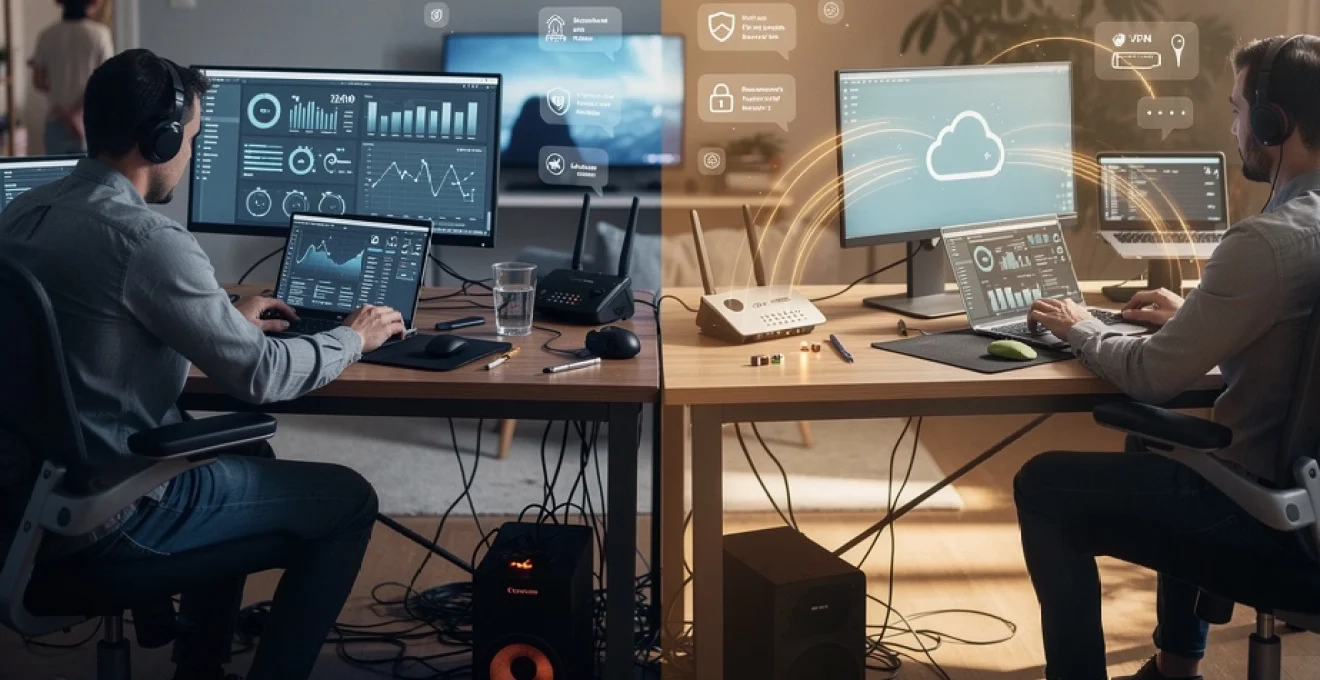
The landscape of work has fundamentally shifted in recent years, with home working transitioning from a niche arrangement to a mainstream employment practice. This transformation has created both unprecedented opportunities and complex challenges for businesses and employees alike. While 68% of UK workers are now classified as pandemic home workers, with the majority preferring to continue remote work for at least half their hours post-pandemic, the reality encompasses far more nuanced considerations than simple preference statistics might suggest.
The rapid adoption of remote work has revealed critical infrastructure gaps, productivity measurement complexities, and significant mental health implications that organisations must address strategically. Understanding these multifaceted dynamics is essential for creating sustainable remote work policies that maximise benefits while mitigating inherent risks. The evidence suggests that successful remote work implementation requires careful consideration of technological infrastructure, management practices, and employee wellbeing frameworks.
Remote work infrastructure requirements and digital workplace solutions
The foundation of successful remote work lies in robust technological infrastructure that can support distributed teams effectively. Many organisations discovered during the pandemic that their existing systems were inadequate for large-scale remote operations, with only 14% of businesses reporting complete preparedness for the shift to home working. This infrastructure gap has highlighted the critical importance of comprehensive digital workplace planning.
High-speed broadband connectivity and bandwidth management strategies
Reliable internet connectivity represents the backbone of remote work success, yet significant disparities exist in access quality across different regions and demographics. Research indicates that 53% of home workers experience poor internet connections, with this figure rising even higher among BAME workers. Rural areas face particular challenges, with some regions experiencing broadband speeds as low as 0.48 Mbps, making effective remote work virtually impossible.
Organisations must develop bandwidth management strategies that account for varying connection qualities among their workforce. This includes implementing adaptive video conferencing settings, optimising file sharing protocols, and providing mobile hotspot allowances for employees in areas with unreliable fixed-line connections. The government has recognised this challenge, establishing targets for full-fibre broadband rollout to hard-to-reach homes by 2030.
Cloud-based collaboration platforms: microsoft teams vs slack performance analysis
The choice between collaboration platforms significantly impacts team productivity and communication effectiveness. Microsoft Teams has seen substantial deployment increases since lockdown implementation, offering integrated video conferencing, file sharing, and project management capabilities within the Microsoft ecosystem. However, performance varies considerably based on organisational size and technical infrastructure requirements.
Slack provides superior messaging organisation and third-party integration capabilities, making it particularly effective for creative and technology-focused teams. The platform’s threading system and channel organisation facilitate more structured asynchronous communication, which proves crucial for teams operating across multiple time zones. Performance analysis suggests that Teams excels in organisations already using Microsoft 365, while Slack demonstrates superior performance in environments requiring extensive third-party tool integration.
Cybersecurity protocols for VPN implementation and data protection
Security vulnerabilities have emerged as a primary concern, with 56% of organisations reporting increased vulnerability to security breaches due to home working arrangements. The widespread use of personal devices for work purposes has created unprecedented attack vectors that traditional office-based security models cannot address effectively.
Virtual Private Network (VPN) implementation requires careful consideration of encryption standards, connection protocols, and bandwidth allocation. Organisations must balance security requirements with user experience, as overly restrictive protocols can significantly impact productivity. Microsoft Endpoint Manager has proven particularly effective for securing and managing remote devices, providing centralised control over security policies and device compliance.
Ergonomic home office setup and equipment investment considerations
The physical workspace significantly impacts employee health and productivity, yet many remote workers lack appropriate equipment. Research reveals that only 51% of employees received laptops from their employers, with far fewer receiving ergonomic support equipment such as adjustable chairs (17%) or laptop stands (8%). This equipment deficit has contributed to widespread musculoskeletal problems among home workers.
Effective equipment investment strategies should prioritise adjustable seating, proper monitor positioning, and adequate lighting solutions. The cost-benefit analysis strongly favours employer investment in home office equipment, as the productivity gains and reduced healthcare costs significantly outweigh initial expenditure. Organisations should
consider offering home-working stipends or equipment loans so employees can create a safe, ergonomic workspace without bearing all the costs themselves. Some organisations now use simple self-assessment checklists and remote video workstation reviews to help staff optimise their setup. Over time, investment in ergonomics reduces absenteeism, mitigates long-term musculoskeletal issues, and signals that the organisation takes remote worker wellbeing seriously.
Productivity metrics and performance management in remote work environments
As home working becomes embedded, organisations must rethink how they define and measure productivity. Traditional management approaches that rely on physical presence or informal observation are no longer fit for purpose in fully remote or hybrid teams. Instead, companies are shifting towards outcome-based performance management, where clear goals, measurable deliverables, and transparent workflows replace “presenteeism” as the primary indicator of contribution.
This shift is not without challenges. Managers often report anxiety about “losing visibility” of their teams, while employees can feel pressured to be constantly available to prove they are working. Research across multiple countries shows that the average remote worker’s day increased by around 48 minutes during the early pandemic period, suggesting that poorly designed performance systems can inadvertently drive overwork. The goal, therefore, is to combine smart productivity tools with humane management practices that value results rather than raw hours.
Time tracking software integration: toggl and RescueTime effectiveness studies
Time tracking tools such as Toggl and RescueTime have become central to many organisations’ remote work strategies, but they must be used thoughtfully. Studies of knowledge workers show that lightweight, self-managed tracking helps people understand where their time goes and identify productivity bottlenecks. For instance, aggregated RescueTime data has repeatedly found that workers spend a surprisingly high proportion of their day on communication tools and administration, rather than deep focus tasks.
Toggl is particularly effective in project-based environments where billable hours and task categories matter. It enables teams to link time entries directly to clients, projects, or milestones, giving managers granular visibility into project progress without micromanaging. RescueTime, by contrast, runs passively in the background, classifying applications and websites as productive or distracting based on role-specific settings. Used in combination, they can give both employees and leaders a data-driven view of how remote work patterns are evolving over time.
The key question is whether these tools enhance autonomy or feel like surveillance. Evidence suggests they are most effective when framed as aids to self-management rather than monitoring systems. When you invite employees to review their own dashboards, set personal focus goals, and adjust their routines, time tracking becomes a way to support sustainable productivity rather than enforce constant output.
Key performance indicators for remote employee assessment
Developing fair and transparent key performance indicators (KPIs) for remote employees is essential to avoid bias, especially proximity bias in hybrid teams. Instead of focusing on hours online or responsiveness to instant messages, organisations are increasingly defining KPIs around outputs, quality, and collaboration. For example, a software engineer might be assessed on features delivered, defect rates, and peer feedback, while a customer service agent is evaluated on resolution times, customer satisfaction scores, and accuracy.
Effective remote KPIs typically combine three dimensions: results (what was delivered), behaviours (how work was done, including communication and collaboration), and development (how skills and capabilities are progressing). This balanced approach reduces the risk that highly visible but less impactful tasks are rewarded over quieter, deep-focus work. It also helps ensure that remote workers are not disadvantaged in promotion decisions simply because they are less physically present in the office.
To make these indicators meaningful, managers should co-create goals with team members and review them regularly in one-to-one meetings. Clear documentation of expectations, timelines, and success criteria reduces ambiguity, particularly when you cannot rely on ad hoc corridor conversations. Over time, organisations can use aggregated KPI data to refine their remote work policies and identify where additional support or training may be needed.
Asynchronous communication workflows and response time optimisation
One of the defining features of effective home working is the shift from synchronous to asynchronous communication. Rather than assuming instant responses to every email or chat message, high-performing remote teams design workflows that allow people to respond within agreed time windows. This reduces constant interruption and enables longer periods of deep work, which are vital for complex problem-solving and creativity.
What does this look like in practice? Teams might agree that internal emails are answered within 24 hours and chat messages within a working half-day, while urgent issues are escalated via phone or a dedicated “priority” channel. Documents, decisions, and project updates are stored in shared, searchable locations rather than buried in private inboxes. This “write it down once, access it many times” approach is particularly powerful for distributed teams spanning multiple time zones.
Asynchronous workflows can feel unfamiliar at first, especially for managers used to real-time visibility. However, they reduce meeting overload, cut down on miscommunication, and create a more predictable rhythm for remote work. A helpful analogy is to think of your organisation as moving from a live broadcast model to a streaming model: information is recorded, structured, and made available on demand, rather than relying on everyone tuning in at the same time.
Digital distraction management and focus enhancement techniques
Home working environments offer both fewer office-based interruptions and many more digital distractions. Social media, news alerts, household tasks, and the constant ping of notifications can fragment attention and undermine performance. Studies on remote workers suggest that unmanaged context switching can reduce effective productivity by as much as 40%, mirroring findings in traditional office settings.
To counter this, individuals and organisations are adopting structured focus strategies. Popular techniques include time blocking (allocating fixed blocks for deep work, admin, and meetings), the Pomodoro method (working in focused sprints with short breaks), and using website blockers to temporarily restrict access to distracting sites. Many remote workers find value in configuring “focus modes” on their devices, silencing non-essential notifications during core working hours.
From a management perspective, you can reinforce these behaviours by scheduling collaboration-heavy activities at predictable times and protecting at least part of the day for uninterrupted work. Sharing focus-friendly norms, such as not expecting immediate replies to non-urgent messages, helps build a culture where concentration is respected. Over time, these practices support a healthier balance between responsiveness and sustained attention in remote roles.
Organisational challenges in remote team management and leadership
While technology and individual habits matter, many of the most significant home working challenges are organisational in nature. Leaders must adapt their management style to support dispersed teams, rethinking how they build trust, maintain culture, and ensure equitable opportunities for all employees. Research shows that only a minority of managers have received formal training in leading remote teams, which can result in inconsistent practices and confusion about expectations.
One key challenge is avoiding micromanagement while still providing adequate guidance. In a remote context, over-reliance on monitoring tools or frequent check-ins can erode trust and increase stress, while a completely hands-off approach can leave employees feeling unsupported and adrift. Effective remote leaders strike a balance by setting clear goals, agreeing on communication cadences, and focusing conversations on outcomes and obstacles rather than activity for its own sake.
Another organisational issue is the risk of creating a two-tier workforce in hybrid models, where office-based staff receive more informal mentoring, visibility, and advancement opportunities than colleagues who mostly work from home. Addressing this requires deliberate design: standardising access to information, recording key meetings, formalising mentoring schemes, and ensuring that promotion criteria are transparent and output-focused. By doing so, organisations can harness the benefits of hybrid working without embedding new inequalities.
Mental health and work-life balance considerations for remote workers
The psychological impact of home working has emerged as one of the most complex aspects of the shift to remote and hybrid models. While many employees report improved work-life balance, reduced commuting stress, and better control over their day, others struggle with loneliness, blurred boundaries, and heightened anxiety. Surveys in the UK and Scotland have found elevated levels of loneliness among home workers, particularly younger adults, women, and people living alone.
At the same time, overworking has become a widespread concern. Nearly half of pandemic home workers report finding it harder to switch off from work, and digital presenteeism—responding to emails late at night, logging on early, and skipping breaks—has become common. Without the natural cues of leaving an office or commuting home, many people find that work leaks into evenings and weekends, eroding recovery time and contributing to burnout.
Isolation mitigation strategies and virtual team building methodologies
Human beings are social creatures, and the loss of everyday office interactions can take a real toll. Remote workers frequently mention missing informal chats, shared lunches, and the ability to “just turn to the person next to you” for quick questions. For new starters and younger employees, the absence of these informal networks can make it harder to build relationships and understand the organisation’s culture.
To mitigate isolation, organisations are experimenting with structured and unstructured virtual social activities. These range from regular virtual coffee breaks and “watercooler” channels in collaboration tools, through to online quizzes, interest groups, and buddy schemes pairing newer staff with more experienced colleagues. While not a perfect substitute for in-person connection, these initiatives provide valuable touchpoints that help people feel seen and included.
More sophisticated approaches to virtual team building focus on shared challenges and collaborative projects. For example, distributed teams might participate in remote hackathons, learning sessions, or volunteering initiatives where they work together towards a non-work goal. These activities strengthen trust and camaraderie in a way that pure social events sometimes struggle to achieve. The most successful programmes are voluntary, varied, and sensitive to different time zones and caring responsibilities.
Boundary setting techniques and workspace separation psychology
Perhaps the most widely reported psychological challenge of home working is the difficulty of maintaining healthy boundaries between work and personal life. When your dining table doubles as a desk and your laptop is always within reach, it can feel as though work never really stops. Research from the International Labour Organisation links this blurring of boundaries to higher rates of stress, insomnia, and work-family conflict.
Practical boundary-setting techniques can make a tangible difference. Creating a dedicated workspace—even a small corner of a room—helps your brain associate that area with work and the rest of the home with rest. Simple rituals, such as a short walk at the start and end of the day, can replicate aspects of a commute and provide psychological transitions between roles. Some remote workers find it helpful to change clothes when “leaving” or “arriving” at work, even when they never step outside.
On the digital side, clear expectations around availability are essential. Agreeing core hours, using status indicators in collaboration tools, and scheduling messages to arrive during working time all support healthier patterns. Organisations can reinforce boundaries by discouraging non-urgent out-of-hours emails and modelling good behaviour at leadership level. Think of boundaries as the frame around a picture: without them, the image—your work and personal life—can easily blur and lose definition.
Stress management protocols and digital wellness frameworks
Sustained home working calls for deliberate stress management strategies, both at the individual and organisational level. Many remote workers report increased cognitive load from constant video calls, digital notifications, and the need to consciously manage tasks that used to be handled implicitly in the office. Left unaddressed, this “always on” digital environment can accelerate burnout.
Digital wellness frameworks provide structured ways to counter these pressures. Common elements include meeting hygiene guidelines (shorter meetings by default, clear agendas, scheduled breaks), “no meeting” times or days to protect focus work, and recommendations on camera use to reduce video fatigue. Some organisations offer access to mental health resources such as counselling, mindfulness apps, or resilience training tailored to remote contexts.
At an individual level, stress management may involve simple but powerful practices: regular movement breaks, setting screen-free periods in the evening, and consciously nurturing offline hobbies and relationships. Employers can support this by normalising these behaviours and ensuring workloads and deadlines are realistic. The aim is not to eliminate stress entirely—some pressure is inevitable—but to create conditions where remote workers can recover and thrive over the long term.
Economic impact assessment of remote work implementation
The economic implications of large-scale home working extend far beyond individual organisations. At the company level, remote and hybrid models can deliver significant cost savings through reduced office space, lower utility bills, and decreased spending on travel and facilities. Some businesses have reported reallocating these savings into technology upgrades, employee development, or enhanced benefits, creating a virtuous cycle that further supports remote work.
For employees, the elimination of daily commuting can translate into substantial financial and time gains. Studies in the US, for example, estimate average annual commuting costs—including fuel, car maintenance, public transport, and lost time—at several thousand dollars per worker. Comparable UK analyses point to savings on season tickets, fuel, parking, and incidental expenses such as lunches and work clothing. However, these benefits can be offset by higher home energy bills and the need to invest in suitable workspaces.
At the wider economic level, home working reshapes demand patterns across sectors. City-centre retail, hospitality, and transport services may see reduced footfall, while suburban and rural areas could benefit from increased daytime spending. There is also evidence that remote work can expand labour market participation by enabling people with disabilities, caring responsibilities, or limited access to transport to take up roles that would previously have been inaccessible. In this sense, remote work can both disrupt existing economic structures and open up new avenues for inclusive growth.
Future trends in hybrid work models and distributed workforce strategies
Looking ahead, most analysts agree that the future of work is neither fully remote nor a simple return to traditional office routines. Instead, hybrid work models—where employees split their time between home and workplace—are becoming the dominant pattern across many sectors. Surveys in the UK suggest that a clear majority of pandemic home workers would prefer to continue working from home for at least part of the week, and employers are increasingly designing policies to accommodate this preference.
Future hybrid strategies are likely to be more intentional than the emergency arrangements put in place during the pandemic. Rather than treating the office as the default location and home as an exception, forward-thinking organisations are asking what work is best done where. Activities that benefit from rich, spontaneous interaction—such as team-building, complex problem-solving, and certain types of creative work—may be scheduled for in-office days, while focused individual tasks are reserved for home-working periods. This “activity-based” approach can help maximise the strengths of both environments.
At the same time, advances in digital workplace technologies will continue to reshape what is possible. Improvements in virtual collaboration tools, immersive environments, and AI-assisted workflows may narrow the gap between in-person and remote collaboration. However, as this article has highlighted, the success of home working and hybrid models will depend as much on culture, leadership, and wellbeing frameworks as on tools and infrastructure. Organisations that can balance flexibility with structure, autonomy with support, and productivity with health are best positioned to harness the full benefits of home working while mitigating its most serious challenges.