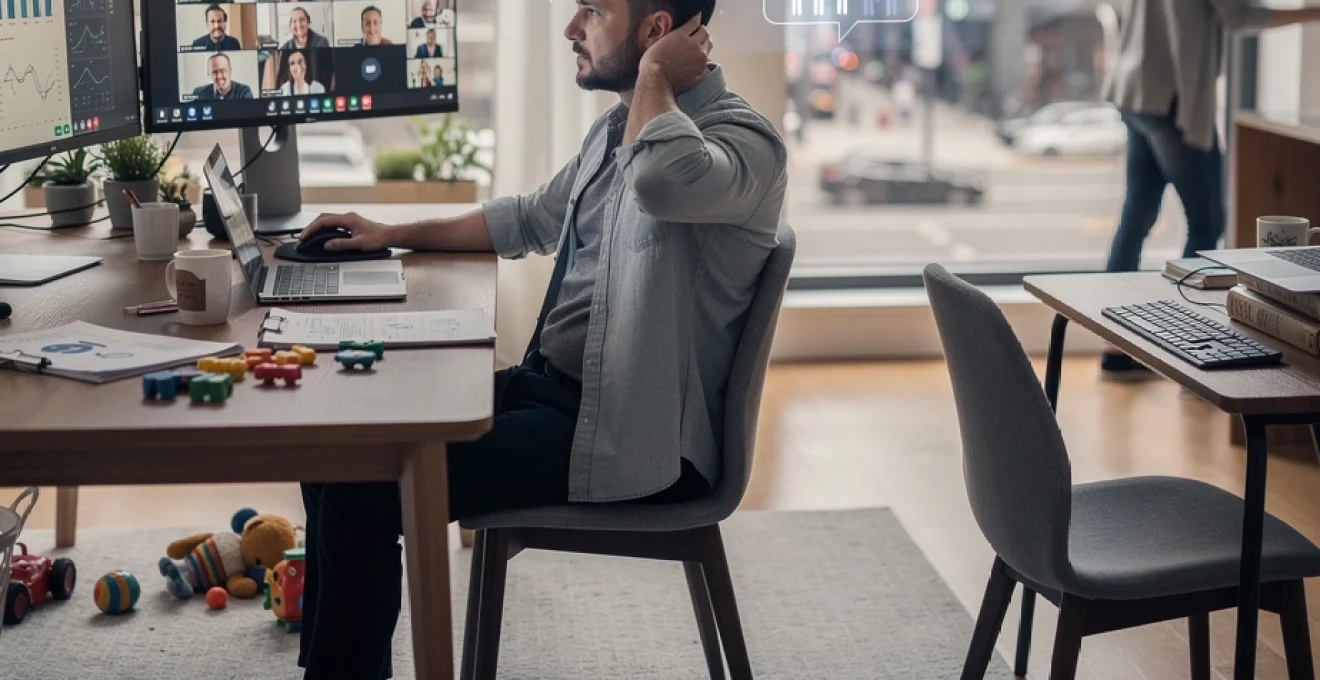
The transformation of domestic spaces into professional environments has fundamentally altered how we conceptualise work, productivity, and human interaction. Since March 2020, millions of employees worldwide have experienced an unprecedented shift from traditional office settings to remote work arrangements, creating a natural experiment in distributed labour that continues to reshape organisational structures and individual behaviours. This massive transition has generated complex ripple effects across multiple domains, from neurological adaptations in cognitive processing to broader economic implications for urban development.
The implications of this shift extend far beyond simple logistical considerations. Remote work has become a catalyst for examining fundamental assumptions about human performance, social interaction, and the very nature of professional identity. As organisations grapple with hybrid models and employees navigate new challenges, understanding the multifaceted consequences of this transformation becomes crucial for informed decision-making and sustainable workplace evolution.
Neurological and psychological adaptations to distributed work environments
The human brain demonstrates remarkable plasticity when adapting to new environmental demands, and the transition to remote work has triggered significant neurological adjustments. These adaptations affect cognitive processing, emotional regulation, and social interaction patterns in ways that researchers are only beginning to understand. The implications of these changes extend beyond immediate productivity concerns to encompass long-term mental health outcomes and cognitive development trajectories.
Cognitive load management in Home-Based workspaces
Working from home introduces unique cognitive demands that differ substantially from traditional office environments. The brain must continuously filter competing stimuli whilst maintaining focus on professional tasks, creating what psychologists term “cognitive load overflow.” This phenomenon occurs when the mental resources required to process environmental information exceed available cognitive capacity, leading to decreased performance and increased mental fatigue.
Research indicates that remote workers experience approximately 23% higher cognitive load during peak working hours compared to their office-based counterparts. This increase stems from the need to mentally compartmentalise domestic and professional responsibilities whilst navigating technological interfaces that may not integrate seamlessly. The brain’s executive functions work overtime to maintain task-switching efficiency, often resulting in what researchers call “decision fatigue” by mid-afternoon.
Attention residue effects from domestic interruptions
Domestic environments present constant potential for interruptions that create lasting attention residue effects. When focus shifts from professional tasks to household concerns—whether answering the door, managing family members, or addressing maintenance issues—the brain requires an average of 23 minutes to fully refocus on the original task. This neurological lag significantly impacts productivity and cognitive performance throughout the working day.
The phenomenon becomes particularly pronounced when interruptions involve emotional processing, such as family conflicts or pet care responsibilities. These situations activate the brain’s emotional regulation systems, creating competing neural pathways that struggle to disconnect from domestic concerns. Studies suggest that workers experiencing frequent domestic interruptions show decreased working memory capacity and reduced problem-solving efficiency compared to those in controlled office environments.
Circadian rhythm disruption and productivity correlation
Remote work arrangements often disrupt natural circadian rhythms through altered light exposure patterns and flexible scheduling practices. The absence of commute-based environmental cues and variable indoor lighting conditions can shift the body’s internal clock by an average of 1.5 hours, affecting hormone production and cognitive performance peaks. This disruption particularly impacts cortisol regulation, which plays a crucial role in alertness and stress management.
Productivity data reveals that remote workers with disrupted circadian rhythms experience 15-20% decreased performance during traditional peak hours (9 AM to 11 AM) but may compensate with improved focus during non-traditional periods. Understanding these individual rhythm variations becomes essential for optimising remote work schedules and maintaining consistent output quality across distributed teams.
Social isolation impact on executive function
Extended periods of reduced social interaction fundamentally alter brain function, particularly in regions responsible for executive decision-making and emotional regulation. Neuroimaging studies indicate that remote workers show decreased activity in the anterior cingulate cortex, an area crucial for social cognition and conflict monitoring. This reduction correlates with reported difficulties in complex decision-making and increased anxiety around professional interactions.
The lack of spontaneous social exchanges—brief conversations, non-verbal communication cues, and collaborative problem-solving moments—creates what neuroscientists term “social
“under-stimulation,” where the brain receives fewer social cues than it has evolved to expect in collaborative work environments.
Over time, this chronic social under-stimulation can impair executive functions such as impulse control, strategic planning, and error monitoring. Remote workers may notice increased difficulty in prioritising tasks, managing complex projects, or navigating workplace conflicts with nuance. Interestingly, longitudinal studies have linked prolonged isolation with reduced cognitive flexibility—the mental ability to shift perspectives and adapt strategies—suggesting that social interaction itself functions as a kind of mental cross-training. For distributed teams, deliberately engineering moments of meaningful connection becomes as important as allocating time for focused deep work.
Ergonomic infrastructure and physical health consequences
While the cognitive and emotional impacts of remote work often dominate the conversation, the physical consequences of improvised home offices are just as significant. Dining tables, sofas, and kitchen counters were never designed to be long-term workstations, yet millions of people still rely on them daily. This mismatch between human biomechanics and domestic furniture is driving a quiet rise in musculoskeletal complaints and other chronic conditions that may only fully manifest years from now.
Occupational health researchers consistently report increased rates of neck pain, lower back pain, and repetitive strain symptoms among remote workers compared with pre-pandemic office-based staff. In many cases, workers lack access to adjustable chairs, external monitors, and appropriate lighting—all basic components of ergonomic infrastructure in traditional offices. As home becomes the office for the long term, investing in evidence-based ergonomic design is no longer a luxury but a prerequisite for sustainable productivity.
Musculoskeletal disorders from improvised workstations
Musculoskeletal disorders (MSDs) are among the most common physical health consequences of poorly designed home offices. Prolonged sitting on non-supportive chairs, leaning forward towards laptop screens, and working at surfaces that are too high or too low all place excessive strain on the spine and supporting musculature. Studies from 2021–2023 have reported that between 41% and 60% of remote workers experienced new or worsened back or neck pain after transitioning to home-based work.
Improvised workstations also encourage static postures, where the same muscles are engaged continuously with minimal movement. This increases the risk of micro-traumas to ligaments and tendons that accumulate over months into chronic pain. Simple interventions—such as ensuring that elbows rest at approximately 90 degrees, screens are at eye level, and feet are flat on the floor—can meaningfully reduce strain. Yet many employees are never trained in these basics, highlighting a growing gap between remote work adoption and ergonomic literacy.
Repetitive strain injury prevalence in home office settings
Repetitive strain injuries (RSIs), including conditions such as tendinitis and carpal tunnel syndrome, have also become more prevalent in home office environments. The widespread use of laptops without external keyboards or mice forces wrists into awkward angles and encourages cramped, repetitive movements. Surveys of remote professionals suggest that up to one-third report symptoms consistent with early-stage RSI, such as tingling fingers, forearm tightness, or reduced grip strength.
Unlike acute injuries, RSIs develop gradually and are easy to overlook until they significantly impair function. Remote workers often extend their workdays into evenings and weekends, increasing cumulative exposure without corresponding breaks. You can think of RSI risk like a slow drip filling a bucket: each keystroke or mouse click adds a tiny amount of strain, and eventually the bucket overflows. Implementing micro-pauses, voice-recognition software for text-heavy roles, and ergonomic input devices can drastically lower that risk for distributed teams.
Ocular health degradation from extended screen exposure
Extended screen exposure has become another defining feature of remote work, bringing ocular health challenges to the forefront. Digital eye strain—characterised by headaches, blurred vision, dry eyes, and difficulty focusing at varying distances—affects an estimated 50–70% of people who work primarily on screens. In remote settings, where meetings, collaboration, and focused work all occur through digital interfaces, total daily screen time can easily exceed 10 hours.
The problem is not simply the number of hours, but the lack of visual diversity. In traditional offices, walking to meeting rooms or interacting with colleagues naturally introduces changes in focal distance. At home, many workers gaze at the same screen at the same distance for most of the day. Adopting basic protective habits—such as the 20-20-20 rule (every 20 minutes, look at something 20 feet away for 20 seconds), optimising screen brightness, and using artificial tears where appropriate—can help preserve ocular health as home-based work becomes more entrenched.
Postural biomechanics and long-term spinal alignment issues
Beyond immediate discomfort, suboptimal home office setups can alter postural biomechanics in ways that affect long-term spinal alignment. Habitual forward head posture, rounded shoulders, and collapsed lower back positioning all change load distribution across spinal discs and supporting musculature. Over years, these patterns can contribute to degenerative disc disease, chronic tension headaches, and persistent upper back pain.
Think of posture like architectural engineering: if a building’s load-bearing beams are misaligned by a few degrees, the structure may stand for years but will age prematurely and fail under stress. Similarly, the spine can tolerate suboptimal alignment for a time, but remote workers who spend thousands of hours in poorly supported positions may face increased healthcare needs later in life. Proactive strategies—such as using sit-stand desks, integrating short mobility routines into the workday, and seeking professional ergonomic assessments—can help maintain healthy biomechanics as distributed work models mature.
Digital communication technologies and collaboration paradigm shifts
The technologies that enable remote work have not only replaced physical offices; they have fundamentally reshaped how teams communicate, make decisions, and build trust. Email, instant messaging, project management platforms, and video conferencing tools form the nervous system of distributed organisations. Yet each tool also introduces friction—latency, misinterpretation, and cognitive overload—that changes the dynamics of collaboration in subtle but important ways.
Organisations that treat digital communication as a simple substitute for in-person interaction often encounter rising coordination costs and declining engagement. By contrast, teams that intentionally design their communication architecture—choosing what should be synchronous versus asynchronous, written versus verbal—can harness remote work to accelerate decision-making and deepen focus. Understanding these paradigm shifts is essential for building resilient, high-performing virtual teams.
Asynchronous communication tools impact on decision-making velocity
Asynchronous communication tools—such as shared documents, ticketing systems, and threaded discussions—are often praised for enabling deep work and cross-time-zone collaboration. They allow team members to contribute when they are most focused, rather than when a meeting is scheduled. However, they also introduce new questions: when does thoughtful deliberation become decision paralysis, and how do you ensure that important messages are not buried in notification streams?
Research on distributed teams suggests that well-structured asynchronous workflows can actually increase decision-making velocity for complex issues, where stakeholders need time to review data and consider options. The key is clarity: clear owners, clear deadlines, and clear decision rights. Without these guardrails, asynchronous channels can devolve into endless comment threads with no resolution. Many high-performing remote organisations adopt lightweight protocols—such as labelling proposals with explicit response-by dates or using short decision memos—to ensure that asynchronous communication supports, rather than slows, strategic progress.
Video conferencing fatigue and cognitive processing overhead
Video conferencing has become synonymous with remote collaboration, but it carries a distinct cognitive cost. Unlike in-person meetings, video calls require continuous, focused attention on screens, heightened self-monitoring (seeing your own image), and conscious interpretation of fragmented non-verbal cues. This increased cognitive processing overhead contributes to what has been dubbed “Zoom fatigue,” a form of mental exhaustion specific to prolonged video interaction.
Controlled studies have found that participants in back-to-back video meetings report significantly higher fatigue and lower task performance compared with those in audio-only or in-person formats. One way to conceptualise this is as an overtaxed graphics card: the brain must render multiple video feeds, interpret micro-delays, and manage self-presentation, all while processing content. Practical mitigations include encouraging camera-optional policies where appropriate, shortening default meeting durations, and replacing some status meetings with asynchronous updates. For individuals, scheduling short buffer periods between calls and alternating high-intensity meetings with solo work can help stabilise energy and focus.
Digital body language interpretation challenges
In distributed environments, much of what would once be conveyed through physical presence—posture, micro-expressions, subtle shifts in tone—is now filtered through webcams, chat messages, and emojis. This creates new challenges in interpreting “digital body language.” Misunderstood emails, ambiguous chat responses, or delayed replies can easily be read as disengagement or conflict, even when none is intended.
Leaders and team members alike must therefore develop a more deliberate communication style, making implicit cues explicit. This might involve stating assumptions (“I’m stepping away for 30 minutes, but I’ll respond after”) or labelling messages with intent (“FYI,” “Action needed,” “Brainstorming”). You can think of this as adding subtitles to a film: the core content is clearer when key emotional and contextual signals are spelled out. Training teams in digital empathy—slowing down before reacting, asking clarifying questions, and assuming positive intent—can significantly reduce friction and build psychological safety in virtual settings.
Virtual team cohesion metrics and performance indicators
Traditional measures of team cohesion—such as in-person attendance at social events or visible participation in office rituals—are less relevant when home becomes the office. Instead, organisations must rely on new indicators to gauge how well virtual teams are functioning. These may include engagement scores from pulse surveys, participation rates in asynchronous discussions, cross-team collaboration data, or even patterns of contribution in shared repositories.
Some companies now track leading indicators of virtual cohesion, such as the frequency of peer recognition, the distribution of speaking time in online meetings, or the diversity of voices contributing to major decisions. When analysed thoughtfully and ethically, these metrics can highlight inclusion gaps and help managers intervene early. However, there is a fine line between supportive analytics and invasive surveillance. Transparent communication about what is measured, why it matters, and how data will—and will not—be used is essential to preserve trust in remote and hybrid workforces.
Economic ramifications on urban development and commercial real estate
The large-scale shift to remote work has generated profound economic consequences, particularly for urban centres and commercial real estate markets. Office districts that once thrived on dense daily footfall—from commuters, business travellers, and office staff—have seen sustained declines in occupancy. In many major cities, office utilisation remains 30–50% below pre-pandemic levels, prompting landlords and policymakers to reconsider the long-term viability of traditional central business district models.
This reconfiguration of where and how work happens is also reshaping local economies. Cafés, restaurants, and retail outlets that depended on office workers have had to adapt to fluctuating demand, while residential neighbourhoods have seen increased daytime activity and spending. At the same time, companies are re-evaluating their real estate footprints, weighing the cost savings of downsizing against the cultural and collaborative benefits of physical hubs. The outcome is likely to be a more polycentric economic landscape, where smaller, flexible spaces complement rather than replace large headquarters.
Urban planners are already exploring adaptive reuse strategies for underutilised office buildings, such as converting them into residential units, mixed-use developments, or education and healthcare facilities. This could help address housing shortages in some regions while revitalising city centres for a post-office era. However, the transition will not be evenly distributed. Regions heavily reliant on commuter-based economies may face prolonged adjustment periods, while areas that successfully attract remote workers with high-quality amenities and digital infrastructure may emerge as new hubs of innovation and growth.
Organisational culture evolution and management methodologies
Remote and hybrid work have forced organisations to confront a central question: if culture is no longer reinforced by shared physical space, what holds a company together? In distributed environments, culture becomes less about visible office artefacts and more about the everyday experiences of communication, recognition, and decision-making. Leaders can no longer rely on “management by walking around”; instead, they must cultivate culture through intentional rituals, transparent practices, and consistent digital behaviours.
Management methodologies are evolving accordingly. Output-based performance frameworks are gradually replacing time-and-presence metrics, with greater emphasis on clear objectives, measurable outcomes, and autonomy. Agile approaches, which prioritise iterative progress and continuous feedback, map naturally onto distributed teams. At the same time, managers are being asked to develop new competencies: facilitating inclusive virtual meetings, recognising early signs of burnout in remote staff, and balancing flexibility with accountability. Organisations that invest in these skills are better positioned to maintain strong cultures even when their people rarely share the same physical room.
One emerging pattern is the rise of “culture by design,” where companies explicitly codify norms for communication, collaboration, and wellbeing in remote contexts. This might include guidelines for response times, expectations about availability, norms for camera use, and shared language for discussing workload and boundaries. Rather than assuming culture will emerge organically, leaders treat it as a product to be designed, tested, and iterated. For employees, this can provide a stabilising framework in an otherwise fluid work environment, helping them navigate distributed work with greater confidence and clarity.
Regulatory compliance and employment law adaptations for remote workforce
The acceleration of remote work has outpaced many existing regulatory frameworks, prompting governments and organisations to reassess how labour laws apply when the workplace is also the home. Questions that were once peripheral—such as which jurisdiction’s laws apply to an employee working remotely across borders, or how to ensure health and safety in a private residence—have become central compliance challenges. Regulators are beginning to respond with updated guidance on working time, right-to-disconnect provisions, and employer responsibilities for ergonomic and psychological safety in home workplaces.
For employers, managing a distributed workforce now involves navigating a patchwork of regulations that may vary by country, region, or even municipality. Issues such as tax residency, data protection, expense reimbursement for home office equipment, and monitoring practices all require careful legal and ethical consideration. You might think of remote-work compliance as shifting from a single playing field to a series of overlapping fields, each with its own rules. Without robust policies and expert advice, organisations risk unintended breaches, employee disputes, or reputational damage.
Forward-looking companies are proactively updating employment contracts, remote work policies, and training programmes to reflect this new reality. Some are formalising cross-border remote work arrangements with clear limits and support structures, while others are establishing “country hubs” to centralise compliance in key jurisdictions. At the same time, there is growing recognition that regulatory frameworks must also protect remote workers from overreach, ensuring that digital monitoring, extended availability expectations, and cost-shifting do not undermine fundamental labour rights. As home continues to function as the office for millions, the evolution of employment law will play a decisive role in shaping a fair and sustainable remote work landscape.