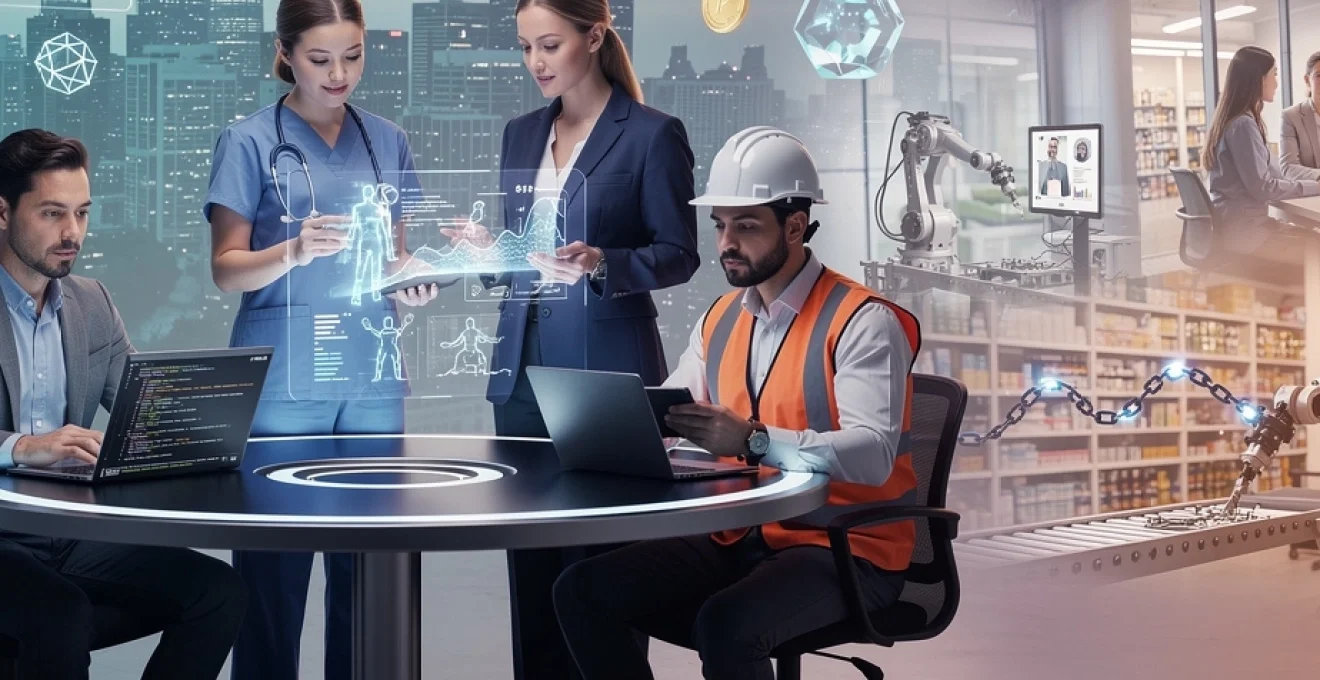
The workplace transformation accelerated by artificial intelligence and automation has fundamentally altered how professionals approach career development and skill acquisition. As machines increasingly handle routine tasks, the premium on human adaptability and continuous learning has never been higher. This shift represents more than just technological evolution—it signals a complete reimagining of professional competencies and learning methodologies.
Modern professionals face an unprecedented challenge: remaining relevant in careers where the half-life of technical skills continues to shrink. The World Economic Forum estimates that 50% of all employees will need reskilling by 2025, yet traditional educational models struggle to keep pace with this demand. Success in this environment requires embracing neuroplasticity-based learning approaches and developing robust frameworks for continuous skill development.
The convergence of automation technologies with human expertise creates new opportunities for those prepared to evolve alongside these systems. Rather than viewing automation as a threat, forward-thinking professionals are leveraging continuous learning strategies to position themselves as essential collaborators with intelligent machines, creating value through uniquely human capabilities enhanced by technological tools.
Machine learning algorithm evolution and human skill adaptation requirements
The rapid advancement of machine learning algorithms demands a fundamental shift in how professionals conceptualise their relationship with technology. Modern AI systems evolve continuously through iterative learning processes, requiring human operators to develop complementary skills that enhance rather than compete with algorithmic capabilities. This symbiotic relationship necessitates ongoing skill adaptation to remain effective in automated environments.
Professional development in this context extends beyond traditional technical training to encompass algorithmic literacy—understanding how machine learning models process information, identify patterns, and make decisions. This knowledge enables professionals to work more effectively with AI systems, troubleshoot algorithmic outputs, and identify opportunities for human intervention where nuanced judgement proves essential.
Natural language processing advancements in GPT-4 and claude AI systems
The sophistication of modern natural language processing systems has revolutionised content creation, customer service, and communication workflows across industries. GPT-4 and Claude AI demonstrate remarkable capabilities in generating human-like text, conducting complex reasoning, and maintaining contextual awareness across extended conversations. These advances require professionals to develop new competencies in prompt engineering and AI-assisted workflow optimisation.
Content creators, marketers, and communications specialists must now master the art of directing AI systems to produce desired outcomes while maintaining editorial oversight and strategic direction. This involves understanding the nuances of prompt construction, recognising algorithmic limitations, and developing quality assurance processes for AI-generated content. The most successful professionals treat these systems as sophisticated tools that amplify human creativity rather than replace it entirely.
Computer vision technology impact on manufacturing and quality control roles
Computer vision implementations in manufacturing environments have transformed quality control processes, requiring technicians and supervisors to develop new skill sets around visual recognition algorithms and automated inspection systems. These technologies can detect defects with precision surpassing human capabilities, yet require human oversight for complex decision-making and system optimisation.
Manufacturing professionals increasingly need competencies in OpenCV frameworks, sensor integration, and machine learning model training specific to visual recognition tasks. Understanding how to calibrate vision systems, interpret algorithmic confidence scores, and implement feedback loops for continuous improvement becomes essential for maintaining competitive manufacturing operations.
Robotic process automation implementation in financial services and accounting
Financial services organisations deploy robotic process automation to handle repetitive transactions, data entry, and compliance reporting tasks. This automation requires finance professionals to transition from transaction processing roles to exception handling, strategic analysis, and RPA system management. The shift demands understanding of workflow automation tools and process optimisation methodologies.
Accounting professionals must develop expertise in UiPath, Blue Prism, and similar automation platforms to design, implement, and maintain robotic processes. This technical knowledge combines with enhanced analytical skills to identify automation opportunities and ensure compliance with regulatory requirements in automated financial workflows.
Predictive analytics integration in healthcare diagnostics and patient care
Healthcare predictive analytics systems analyse vast datasets to identify patient risk factors, predict treatment outcomes, and optimise care delivery protocols. Medical professionals require new competencies in interpreting algorithmic predictions, understanding statistical confidence intervals, and integrating predictive insights with clinical judgement.
They also need to collaborate with data scientists and IT teams to refine models, flag anomalies, and ensure that algorithms do not unintentionally encode bias or undermine clinical autonomy. In practice, this means learning to question model outputs, compare them with traditional diagnostic indicators, and communicate probabilistic predictions clearly to patients. As predictive analytics becomes more embedded in electronic health records and clinical decision support tools, continuous learning in statistics, data ethics, and digital literacy becomes as critical as medical knowledge itself.
Neuroplasticity-based learning methodologies for digital transformation
Neuroplasticity—the brain’s ability to reorganise itself by forming new neural connections—underpins every effective continuous learning strategy in an automated world. When organisations embrace neuroplasticity-based learning methodologies, they design training that works with how the brain naturally learns and retains information, rather than against it. This is particularly important when professionals must absorb complex, fast-changing topics such as AI, cybersecurity, and advanced analytics while still performing in demanding roles.
By combining evidence-based methods like spaced repetition, active recall, and deliberate practice, professionals can encode new digital skills more deeply and retrieve them more reliably under pressure. Think of these methods as the “learning algorithms” of the human brain: when tuned correctly, they allow you to adapt as rapidly as the automation technologies reshaping your work. The following approaches illustrate how we can intentionally harness neuroplasticity to accelerate upskilling and reskilling.
Spaced repetition algorithms using anki and SuperMemo platforms
Spaced repetition systems (SRS) such as Anki and SuperMemo leverage algorithms that schedule reviews of information at optimally increasing intervals. Instead of cramming complex topics like cloud architecture terms, Python syntax, or compliance regulations, learners revisit material just before they are likely to forget it. This mirrors how synaptic pathways strengthen over time, improving long-term retention while minimising total study time.
For professionals navigating digital transformation, spaced repetition is especially powerful for mastering technical vocabularies, command-line utilities, API endpoints, and domain-specific acronyms. You might, for example, create Anki decks for SQL queries, Kubernetes commands, or cybersecurity incident response playbooks. Over weeks and months, these micro-reviews help transform short-term exposure into fluent, easily retrievable knowledge that can be applied in real-world problem-solving.
Microlearning frameworks through LinkedIn learning and coursera modules
Microlearning breaks complex subjects into bite-sized lessons that can be completed in 5–15 minutes, significantly reducing cognitive overload. Platforms like LinkedIn Learning and Coursera now structure many programmes as modular “learning paths,” allowing busy professionals to progress in small increments while juggling work and personal commitments. This fits the rhythm of modern work, where uninterrupted hours are rare but short windows for focused learning can be found throughout the day.
Because microlearning segments focus on a single concept or skill at a time—such as configuring a cloud resource, interpreting a dashboard, or writing a unit test—they align neatly with how the brain encodes and consolidates new information. You might complete a short Coursera module on data visualisation during a commute, then apply that technique in your next analytics report. Over time, these incremental gains compound, enabling you to build robust digital capabilities without stepping away from your current role.
Active recall techniques for technical skill acquisition
Active recall is the process of deliberately retrieving information from memory rather than passively re-reading or re-watching content. In the context of technical skill acquisition, this might mean closing documentation and trying to write a function from scratch, explaining an algorithm on a whiteboard, or debugging code without immediately copying from an online example. By forcing the brain to reconstruct knowledge, you deepen understanding and highlight gaps that require further study.
For professionals learning automation tools or programming languages, practical active recall exercises can include building small projects from memory, sketching data pipelines on paper, or teaching a colleague how a specific library works. You could, for instance, challenge yourself to implement a simple REST API or design a basic machine learning workflow without step-by-step instructions. Each retrieval attempt acts like a “workout” for the neural circuits involved, gradually turning fragile, recently learned concepts into durable expertise.
Deliberate practice protocols for programming languages and data science
Deliberate practice differs from routine repetition by targeting specific weaknesses with focused, challenging exercises and immediate feedback. In programming and data science, this means going beyond merely “writing more code” to designing practice that stretches your capabilities: solving new categories of problems, refactoring code for performance, or tackling progressively more complex datasets. You intentionally operate at the edge of your current competence where learning is maximised.
Effective deliberate practice protocols might include weekly problem sets on platforms like LeetCode or Kaggle, code reviews with more experienced peers, or time-boxed sprints to implement particular design patterns or optimisation techniques. By defining clear objectives—such as improving algorithmic complexity, enhancing model interpretability, or automating repetitive analysis—you ensure that each practice session contributes directly to your digital transformation skillset. Over time, this sustained, purposeful effort rewires your brain for higher-level problem-solving in automated environments.
Industry-specific reskilling frameworks for automation resilience
While general digital literacy is essential, continuous learning becomes most powerful when it is tailored to the specific automation pressures and opportunities within each industry. Manufacturing, finance, healthcare, and retail are all experiencing distinct waves of technological disruption, from smart factories to algorithmic trading and telemedicine. To build automation resilience, professionals in these sectors need reskilling frameworks that align with real workflows, regulatory constraints, and customer expectations.
Industry-specific frameworks translate abstract concepts like “AI” or “Industry 4.0” into concrete competencies, job profiles, and learning pathways. They help organisations map current roles to emerging ones, identify skill gaps, and prioritise training investments. For individuals, they offer a roadmap for transitioning from vulnerable positions to future-proof careers, turning uncertainty into a structured opportunity for growth.
Manufacturing 4.0 competencies in siemens and SAP integration systems
In advanced manufacturing, Industry 4.0 initiatives combine IoT sensors, cyber-physical systems, and real-time analytics platforms from vendors such as Siemens and SAP. Shop-floor technicians and engineers who previously focused on mechanical maintenance now need to understand data flows, interface protocols, and system integration concepts. Competence in tools like Siemens TIA Portal, OPC UA standards, and SAP Digital Manufacturing Cloud is rapidly becoming as important as traditional mechanical skills.
Reskilling frameworks for Manufacturing 4.0 typically emphasise three clusters of skills: data-centric thinking, systems integration, and human–machine collaboration. Practically, this might involve learning to configure PLCs that stream data into MES/ERP systems, interpreting dashboards that visualise machine performance, and collaborating with data engineers to create predictive maintenance models. By continuously learning these integration skills, manufacturing professionals position themselves not as operators of isolated machines, but as orchestrators of interconnected, intelligent production environments.
Financial technology adaptation for blockchain and cryptocurrency markets
In financial services, the rise of blockchain networks, digital assets, and decentralised finance (DeFi) is reshaping everything from payments to capital markets. Traditional finance professionals who once specialised solely in legacy systems and fiat instruments now need at least a working understanding of distributed ledgers, smart contracts, and crypto custody models. This does not mean everyone must become a Solidity developer, but it does require algorithmic literacy around consensus mechanisms, token economics, and on-chain analytics.
Continuous learning in this domain might include completing fintech certifications, experimenting with test networks, or analysing blockchain data to detect fraud or compliance risks. Professionals in risk, compliance, and audit functions, for example, can benefit from learning how blockchain analysis tools surface suspicious transaction patterns. By adapting to blockchain and cryptocurrency markets, finance experts can bridge the gap between regulated institutions and emerging digital asset ecosystems, ensuring that automation and innovation occur within robust governance frameworks.
Healthcare digital literacy for electronic health records and telemedicine
Healthcare organisations rapidly expanded electronic health record (EHR) usage and telemedicine platforms during and after the pandemic. Clinicians who once relied primarily on paper charts are now expected to navigate complex EHR interfaces, interpret algorithm-driven alerts, and deliver care through video consultations. Digital literacy in this context goes beyond basic computer skills; it includes understanding interoperability standards, privacy regulations, and the limitations of clinical decision support tools.
Reskilling frameworks for healthcare staff often blend technical training with workflow redesign and communication skills. For instance, clinicians may need to learn how to structure notes so that EHR systems capture meaningful data for future analytics, or how to maintain patient rapport through a screen while using remote monitoring devices. As telehealth, remote diagnostics, and AI-supported triage become standard, continuous learning ensures that digital tools enhance rather than erode the human aspects of patient care.
Retail omnichannel management and customer experience analytics
Retail has evolved into a fully omnichannel environment where customers move fluidly between physical stores, e-commerce sites, social platforms, and mobile apps. Automation now powers inventory forecasting, personalised recommendations, and real-time pricing adjustments. Retail professionals who historically focused on merchandising or store operations must adapt to roles that involve understanding customer experience analytics, digital marketing funnels, and supply chain automation.
Practical reskilling in this sector can include learning to interpret customer journey dashboards, collaborating with data teams on A/B tests, and using CRM platforms to personalise outreach. Store managers may increasingly oversee click-and-collect logistics, in-store kiosks, and workforce scheduling algorithms. By building continuous learning into retail careers—through short courses in data literacy, UX fundamentals, and marketing automation—professionals can help design seamless experiences that integrate human service with intelligent systems.
Cognitive load management in accelerated learning environments
As automation accelerates change, professionals face an overwhelming volume of new tools, frameworks, and compliance requirements. Without deliberate cognitive load management, continuous learning can quickly become unsustainable, leading to burnout rather than growth. Cognitive load theory reminds us that working memory has strict limits; when those limits are exceeded, comprehension and retention suffer, no matter how motivated we are to learn.
Managing cognitive load in accelerated learning environments begins with intentional pacing and prioritisation. Instead of trying to master multiple complex technologies simultaneously, you can sequence learning into manageable phases: foundational concepts first, then applied projects, and finally optimisation and specialisation. Chunking information into coherent “learning blocks,” using visual representations like diagrams for architectures or workflows, and eliminating unnecessary distractions during study sessions all help free up mental bandwidth. Organisations can support this by designing training that focuses on critical tasks, provides just-in-time resources, and avoids overloading employees with dense, one-off workshops.
Professional development platforms and certification pathways
In an automated world where job roles and required skills evolve continuously, professional development platforms and certification pathways act as navigation systems for career growth. Rather than relying solely on traditional degrees that may quickly age, professionals increasingly turn to stackable micro-credentials, vendor certifications, and role-based learning paths. These offer clearer signals to employers about specific competencies in tools, frameworks, and methodologies that underpin digital transformation.
Platforms such as Coursera, edX, and Udacity collaborate with universities and technology companies to offer specialisations in data engineering, AI, cybersecurity, cloud computing, and more. At the same time, vendor certifications from providers like AWS, Microsoft, Google Cloud, Cisco, and Salesforce validate proficiency in widely adopted ecosystems. When thoughtfully selected and sequenced, these certifications form coherent pathways—from foundational to associate to expert levels—that align with emerging job architectures such as cloud architect, machine learning engineer, or automation strategist.
For organisations, supporting employees through these pathways—via sponsorship, study time, and post-certification project opportunities—creates a virtuous cycle. Employees gain portable credentials and confidence, while employers benefit from up-to-date capabilities and stronger retention. For individuals, the key is to treat certifications not as endpoints but as milestones in a broader continuous learning journey, always asking: how will this credential help me collaborate more effectively with automated systems and deliver higher-value outcomes?
Future-proofing career trajectories through interdisciplinary knowledge integration
Automation rarely disrupts a single discipline in isolation; it emerges at the intersections of fields—where software meets logistics, where machine learning meets medicine, where behavioural science meets product design. Future-proof careers therefore depend not only on deep expertise in one domain, but also on the ability to integrate knowledge across disciplines and apply it creatively. In many ways, the most resilient professionals become “connectors,” translating between technical and non-technical stakeholders, and combining insights from multiple areas to solve novel problems.
Developing interdisciplinary capability involves intentionally stepping outside your comfort zone: a software engineer learning basic finance to build better trading tools, a clinician studying data ethics to evaluate AI diagnostics, or an operations manager exploring behavioural psychology to design more effective workflows. Over time, these cross-domain explorations create a lattice of knowledge that mirrors the complex systems automation is transforming. When a new technology appears, you can situate it within this lattice, asking how it interacts with regulation, user behaviour, security, and organisational culture.
In practice, future-proofing your career through interdisciplinary integration might mean alternating learning sprints between depth and breadth: drilling down into a core skill like cloud architecture, then broadening into adjacent topics such as cost optimisation, sustainability, or organisational change management. It also means seeking projects that expose you to diverse teams and problem spaces, so that you continually exercise the meta-skill of learning how to learn in unfamiliar contexts. In an automated world, the ability to connect dots across domains—and to keep redrawing the map as new technologies emerge—may be the most valuable continuous learning capability of all.