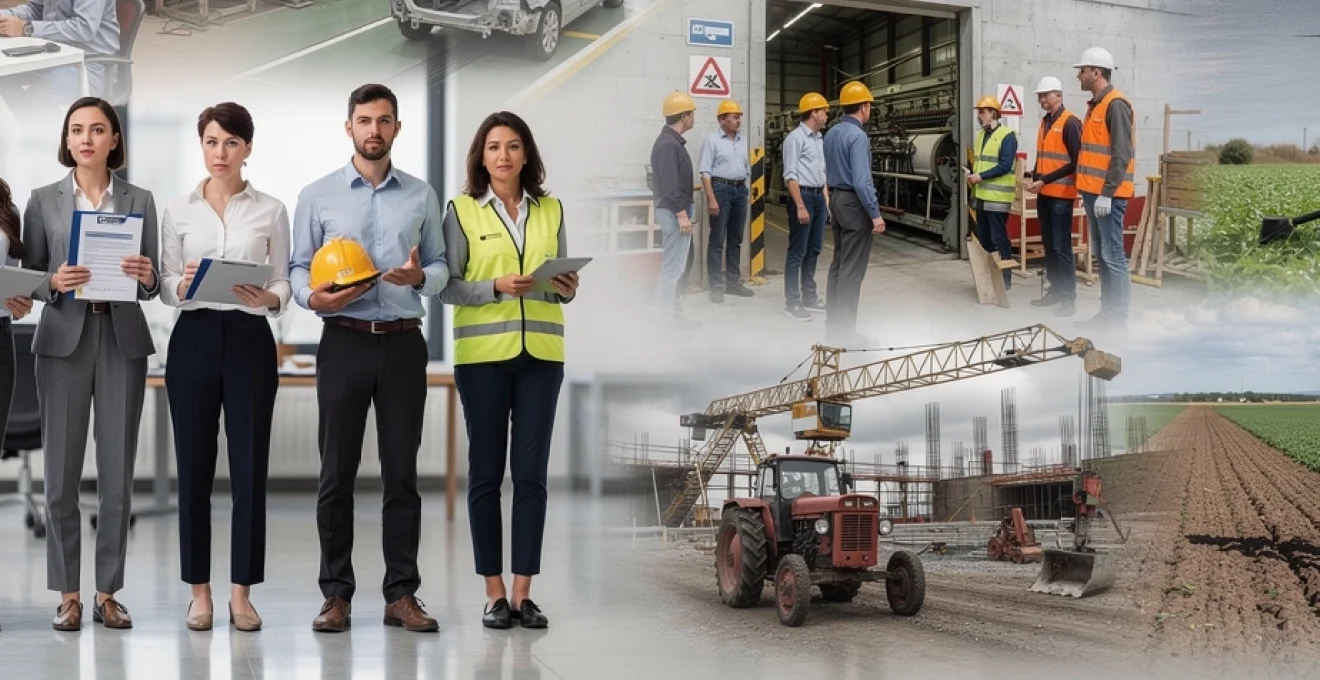
The modern labour market presents a stark paradox: while unemployment remains a concern in many regions, numerous industries face critical talent shortages that threaten their very survival. This disconnect reveals fundamental shifts in worker expectations, technological advancement, and societal values that have left traditional sectors struggling to compete for the brightest minds. From manufacturing plants desperately seeking skilled technicians to mining companies unable to fill essential roles, entire industries find themselves caught between outdated recruitment practices and the evolving demands of a digital-first workforce.
The challenge extends far beyond simple supply and demand economics. Today’s job seekers evaluate potential employers through multiple lenses: environmental impact, career progression opportunities, workplace culture, and alignment with personal values. Industries that once relied on steady employment and decent wages to attract workers now discover these incentives insufficient to draw talent away from emerging sectors offering innovation, flexibility, and purpose-driven missions. The consequences ripple through entire economic ecosystems, creating skills gaps that compound over time and threaten long-term industry viability.
Traditional manufacturing sectors face critical skills shortage crisis
Manufacturing industries across developed nations confront an unprecedented talent crisis that threatens decades of operational excellence and economic stability. The sector’s struggle to attract new workers reflects deeper structural challenges that extend beyond simple demographic shifts. Modern manufacturing requires increasingly sophisticated skills, yet public perception often remains anchored to outdated stereotypes of dirty, dangerous, and technologically stagnant environments.
Steel production industry workforce demographics and retirement patterns
Steel production facilities worldwide grapple with an aging workforce approaching retirement en masse, creating knowledge gaps that prove difficult to bridge. Industry data reveals that approximately 40% of steelworkers are over 50 years old, with retirement rates accelerating as baby boomers exit the workforce. This demographic shift occurs precisely when steel production demands increasingly sophisticated technical knowledge to operate advanced furnace systems, automated quality control equipment, and environmental monitoring technologies.
The industry’s recruitment challenges stem partly from geographical concentration in regions experiencing broader economic decline. Traditional steel-producing areas often lack the diverse employment opportunities and cultural amenities that attract younger professionals. Career progression pathways within steel production companies frequently appear limited to external observers, despite the reality that modern steel facilities offer extensive technical training and advancement opportunities into supervisory, engineering, and management roles.
Automotive assembly line technician recruitment challenges at ford and GM
Major automotive manufacturers face mounting pressure to fill assembly line positions as vehicle production becomes increasingly automated and technically complex. Ford and General Motors report significant difficulties recruiting technicians capable of maintaining and operating sophisticated robotic systems, advanced welding equipment, and computerised quality assurance protocols. The traditional assembly line worker role has evolved into a position requiring understanding of pneumatic systems, programmable logic controllers, and predictive maintenance technologies.
Compensation packages in automotive manufacturing often exceed those available in emerging service sectors, yet recruitment remains challenging. The industry’s cyclical nature, with periodic layoffs during economic downturns, creates uncertainty that deters potential applicants. Additionally, shift work requirements and the physical demands of manufacturing environments conflict with lifestyle preferences of many contemporary job seekers who prioritise work-life balance and flexible scheduling arrangements.
Textile manufacturing labour market dynamics in Post-Industrial regions
Textile manufacturing confronts unique recruitment obstacles as the industry attempts to reshore production capabilities while competing against low-cost international alternatives. Post-industrial regions that once housed thriving textile operations now struggle to rebuild manufacturing workforces with relevant skills and experience. The sector requires workers capable of operating computerised looms, maintaining complex dyeing systems, and ensuring quality control standards that meet international specifications.
The perception of textile work as low-skilled and poorly compensated persists despite significant technological advancement within the industry. Modern textile facilities incorporate artificial intelligence for pattern recognition, automated material handling systems, and sophisticated environmental controls that require technical expertise. However, educational institutions rarely promote textile manufacturing careers, contributing to a pipeline problem that perpetuates talent shortages across the sector.
Heavy machinery operations apprenticeship programme decline
Traditional apprenticeship programmes in heavy machinery operations have experienced dramatic enrollment declines as young people pursue higher education pathways instead of trades-based careers. Industries requiring crane operators, bulldozer technicians, and heavy equipment maintenance specialists struggle to replace retiring workers who acquired skills through on-the-job training programmes that modern safety regulations and insurance requirements make increasingly
challenging to replicate at scale. Liability concerns have pushed many firms to require formal certifications before trainees can even touch equipment, creating a catch-22 for school leavers with no prior exposure. At the same time, secondary schools often steer high-performing students toward university rather than technical careers, further shrinking the pool of applicants. As apprenticeship numbers decline, employers lose the structured talent pipelines that once ensured a steady flow of qualified operators into heavy machinery roles.
Reversing this trend requires coordinated action between industry bodies, vocational schools, and policymakers. Companies that successfully attract new talent into heavy machinery operations often invest in modern training centres, simulators, and clear progression frameworks leading from apprentice to master operator. Some have introduced hybrid models that blend classroom learning with supervised on-site experience, reducing safety risks while still providing hands-on exposure. By reframing apprenticeships as high-tech, well-paid pathways rather than last-resort options, these employers begin to rebuild interest in critical operational roles.
Perception barriers and industry image problems deterring millennials
Beyond manufacturing, several legacy industries struggle with deep-rooted image problems that directly impact their ability to attract younger workers. Millennials and Gen Z candidates often view these sectors through the lens of social media narratives, high-profile incidents, and long-standing stereotypes. Even when compensation and job security appear attractive, perceived misalignment with personal values or lifestyle expectations can override rational assessment of opportunities.
Coal mining safety records impact on graduate recruitment
Coal mining provides a clear example of how historical safety records can shape modern recruitment outcomes. Catastrophic accidents from previous decades still dominate public consciousness, even though many operations have significantly improved their safety performance. Graduate engineers and geologists frequently associate mining careers with high physical risk, remote locations, and limited long-term prospects in an era of decarbonisation. As a result, mining companies compete for a shrinking pool of candidates willing to consider underground or open-pit roles.
To address these coal mining recruitment challenges, leading firms emphasise rigorous safety systems, real-time monitoring technologies, and automation that removes workers from the most hazardous environments. Some organisations showcase data demonstrating dramatic reductions in lost-time injuries and fatalities over the past 20 years. However, simply improving statistics is not enough; companies must also communicate these changes effectively through campus outreach, virtual mine tours, and transparent discussion of career progression beyond frontline roles. When prospective employees understand that modern mining jobs involve advanced analytics, remote operations centres, and sustainability initiatives, the sector becomes easier to consider as a viable career path.
Construction industry gender diversity statistics and cultural resistance
The construction industry faces a dual challenge: acute labour shortages and persistent gender imbalance. In many developed economies, women still represent less than 15% of the total construction workforce and an even smaller percentage in on-site roles. Younger candidates, particularly women and non-binary professionals, often perceive construction sites as unwelcoming environments dominated by outdated attitudes and limited flexibility. This perception may be reinforced by stories of harassment, lack of appropriate facilities, and a culture that prizes long hours over work-life balance.
Improving construction industry gender diversity is not simply a matter of marketing. It requires structural changes in site management, safety protocols, and career development frameworks. Forward-thinking firms invest in inclusive leadership training for supervisors, clear anti-harassment policies, and visible female role models in project management and engineering roles. Some companies experiment with flexible scheduling, job-sharing arrangements, and targeted mentorship programmes aimed at underrepresented groups. As cultural resistance slowly decreases and success stories multiply, construction becomes more attractive to a broader talent pool, helping to alleviate chronic skills shortages.
Oil and gas sector environmental stigma among gen Z professionals
Oil and gas companies historically offered some of the highest starting salaries for engineers, geoscientists, and project managers. Yet, in recent years, many graduates have turned away from the sector due to environmental concerns and doubts about long-term career stability. For Gen Z professionals who grew up with climate change as a central issue, working for a fossil fuel producer can feel incompatible with personal values. Social media discourse amplifies this stigma, often portraying oil and gas careers as outdated or ethically questionable.
In response, major energy companies increasingly rebrand as “integrated energy” or “low-carbon solutions” providers, highlighting investments in renewables, carbon capture, and energy efficiency. Graduate programmes now feature rotations in sustainability projects and innovation labs, offering recruits the chance to contribute to energy transition initiatives from day one. Still, a credibility gap remains: candidates scrutinise emissions targets, governance structures, and actual capital allocation to judge whether commitments are genuine. Organisations that transparently report progress, involve employees in climate strategy, and offer cross-training into emerging green roles stand a better chance of attracting environmentally conscious talent who want to shape the future of energy from within.
Agriculture technology adoption versus traditional farming stereotypes
Agriculture sits at the intersection of advanced technology and enduring stereotypes. On one hand, precision agriculture, drones, satellite imaging, and data-driven crop management have transformed the industry. On the other, many young people still associate farming careers with long hours, low margins, and limited innovation. This disconnect makes it difficult for agribusinesses and family farms to recruit agronomists, data analysts, and equipment technicians who could help drive productivity and sustainability.
Bridging this gap requires telling a different story about modern agriculture careers. Universities with strong agricultural programmes increasingly partner with farmers and agtech start-ups to offer internships that expose students to sensor networks, autonomous tractors, and predictive analytics. Employers emphasise that working in agriculture does not always mean living in isolated rural communities; remote monitoring platforms and distributed teams allow specialists to support multiple sites from regional hubs or even urban locations. When candidates recognise that agri-food supply chains offer roles in sustainability, logistics, product development, and policy, the sector begins to look less like a last resort and more like a frontier for meaningful, impact-driven work.
Compensation structures and career progression limitations
Even when industries manage to overcome image problems, compensation structures and opaque career paths can still undermine their ability to attract new talent. Younger workers compare offers not only on base salary but also on variable pay, benefits, learning budgets, and the speed at which they can advance. Sectors with rigid pay scales, seniority-based promotions, and limited lateral mobility often lose out to technology firms and start-ups that promise faster growth and more personalised packages.
Many legacy industries still rely heavily on overtime pay and shift differentials to make roles financially attractive. However, this approach clashes with the increasing emphasis on work-life balance and mental health. When candidates realise that the advertised “high earnings potential” depends on 60-hour weeks or unpredictable schedules, they may opt for lower-paying but more flexible knowledge-based roles. To compete, traditional employers need to redesign compensation models that reward skills acquisition, cross-functional contributions, and innovation, not just time served.
Career progression limitations also play a crucial role in talent attraction. In some sectors, employees must wait years for a supervisor to retire before a promotion becomes available, creating a perception of stagnation. By contrast, high-growth industries often offer rapid progression, lateral moves into adjacent functions, and opportunities to lead projects early in one’s career. Companies in struggling sectors can counter this by building clear competency frameworks, internal training academies, and transparent promotion criteria that show ambitious candidates how they can progress over three, five, or ten years.
One practical strategy is to introduce “dual career ladders” that allow technical specialists to advance without moving into people management. This approach recognises that not every talented engineer or operator wants to become a supervisor yet still deserves increased responsibility and compensation. When combined with regular development conversations and structured mentoring, such frameworks can transform industries previously seen as dead-end into environments where continuous growth is both visible and attainable.
Skills mismatch between educational outcomes and industry requirements
A persistent skills mismatch sits at the heart of many talent shortages. Universities and training institutions often design curricula years in advance, while industry requirements evolve rapidly under the pressure of automation, regulation, and global competition. As a result, graduates enter the labour market with theoretical knowledge but limited exposure to the specific tools, standards, and workflows employers use daily. This gap is particularly pronounced in sectors like advanced manufacturing, energy, and infrastructure, where regulatory compliance and technical precision are non-negotiable.
From the employer’s side, job descriptions can exacerbate the problem by listing long inventories of software and certifications rather than core competencies. Candidates who could learn industry-specific systems quickly may self-select out if they do not already meet every requirement. At the same time, some organisations underinvest in onboarding and continuous learning, expecting “job-ready” hires to be productive from day one. When both sides cling to unrealistic expectations, vacancies stay open and frustration grows.
Addressing the skills mismatch requires closer collaboration between educators and employers. Successful models often involve industry advisory boards that help universities update curricula, co-designed apprenticeship programmes, and work-integrated learning placements where students spend part of their degree embedded in companies. Micro-credential programmes and short, stackable courses also allow workers to upskill in specific technologies or regulations without committing to multi-year degrees. For industries struggling to attract talent, offering to co-fund such training or guarantee interviews for programme graduates can be a powerful signal of commitment.
On an individual level, you can think of bridging the skills gap like learning a new software tool on top of an existing operating system. The foundational “OS” is your critical thinking, communication, and problem-solving ability; industry-specific skills are the applications you install. Employers that recognise this distinction and hire for underlying potential—while providing structured pathways to acquire the “apps”—will have a competitive advantage in tight labour markets. Likewise, candidates who proactively pursue certifications, online courses, and practical projects aligned with target industries can position themselves as solutions rather than risks.
Digital transformation gaps in legacy business models
Many sectors face an additional barrier to attracting new talent: visible lag in digital transformation. For digital-native workers, joining an organisation that still relies on paper-based processes, outdated software, or siloed systems can feel like stepping back in time. These gaps in technology adoption do more than slow operations; they signal a broader reluctance to innovate. In a world where employees expect consumer-grade tools and data-driven decision-making, legacy business models that resist change struggle to compete for skilled professionals.
Retail banking branch operations versus fintech innovation
Retail banking illustrates this contrast sharply. Traditional banks still depend on branch networks with manual workflows, legacy core systems, and hierarchical decision structures. While many institutions have invested in mobile apps and online services, back-end processes can remain cumbersome, requiring multiple approvals and re-keying of data. For young professionals interested in financial services careers, these environments often feel restrictive compared to fintech start-ups that iterate quickly, deploy cloud-native platforms, and encourage experimentation.
The result is a talent drain from retail banking operations into fintech roles that offer exposure to cutting-edge technologies such as open banking APIs, machine learning-based risk models, and embedded finance solutions. To remain competitive, established banks must accelerate their own digital banking transformation, not only to improve customer experience but also to modernise internal workflows. This can include automating routine compliance checks, deploying collaboration tools that reduce email dependence, and empowering cross-functional squads to solve specific customer problems.
Some banks have responded by creating internal “digital garages” or innovation hubs designed to mimic start-up cultures. These units often attract tech-savvy graduates who might otherwise join pure-play fintech firms. Yet the key challenge remains integration: if innovative pilots never influence core branch operations or employee experience, disillusionment can set in. The banks that succeed in attracting and retaining digital talent are those that treat innovation as a whole-organisation shift, not a side project, ensuring that frontline staff also benefit from improved tools and clearer, data-backed decision frameworks.
Print media journalism career trajectories and revenue decline
Print media faces perhaps the most visible digital disruption of any industry. Declining advertising revenue, shifting readership habits, and the rise of social platforms have transformed business models. For aspiring journalists, traditional newsrooms once represented the pinnacle of the profession, offering stable career paths and clear editorial standards. Today, many outlets operate with reduced staffs, frequent restructuring, and uncertain long-term viability, making print journalism careers appear precarious.
At the same time, the skills required for journalistic success have expanded. Reporters must now understand audience analytics, search engine optimisation, multimedia storytelling, and social media engagement. However, not all media organisations have invested adequately in upskilling existing staff or in digital content tools that enable modern storytelling. This digital transformation gap makes it harder to convince talented graduates—who might also consider roles in content marketing, corporate communications, or creator economy platforms—to choose traditional print-based outlets.
To attract new talent, forward-looking publishers position themselves as multi-platform news organisations rather than “newspapers.” They offer training in data journalism, podcasting, and video production, as well as clear pathways into specialised beats such as climate, technology, or investigative reporting. Some also experiment with membership models and reader-funded initiatives that provide more predictable revenue streams and editorial independence. For candidates motivated by public interest journalism, the opportunity to work with robust fact-checking processes and meaningful impact can outweigh salary differentials—provided the organisation demonstrates a credible plan for financial sustainability and digital growth.
Traditional telecommunications infrastructure roles versus cloud computing
Telecommunications providers historically recruited large numbers of engineers and technicians to design, build, and maintain physical networks. These roles focused on switches, copper lines, and later fibre-optic installations, governed by complex regulatory frameworks and long investment cycles. As cloud computing, software-defined networking, and 5G architectures gain prominence, the skills profile required in telecoms has shifted dramatically. Yet many job descriptions and internal training programmes still reflect legacy infrastructure priorities rather than software-centric competencies.
Young professionals with strong coding and cloud skills often gravitate toward hyperscale cloud providers, SaaS companies, or high-growth start-ups instead of incumbent telecoms operators. They perceive the latter as slower-moving, more bureaucratic, and less innovative, even though telcos sit at the heart of global connectivity. This perception gap represents a missed opportunity: modern telecommunications offers complex challenges in network virtualisation, edge computing, cybersecurity, and IoT orchestration that could be very attractive to ambitious engineers.
Closing this gap requires telecom companies to reposition themselves as technology firms, not just utilities. Practical steps include partnering with cloud providers on joint graduate programmes, investing in internal academies focused on DevOps and automation, and restructuring teams around product-based agile methodologies rather than rigid functional silos. When early-career professionals see that they can work with cutting-edge technologies, contribute to open-source projects, and progress into architecture or product leadership roles, traditional telecoms infrastructure work becomes more than maintaining cables—it becomes building the digital backbone of the modern economy.
Geographic and location-based recruitment constraints
Finally, geography plays a crucial but often underappreciated role in why some industries struggle to attract new talent. Many sectors with acute shortages—mining, heavy manufacturing, agriculture, and certain energy segments—are concentrated in remote or economically depressed regions. While previous generations may have accepted relocation as a necessary step, younger workers frequently prioritise access to cultural amenities, diverse communities, and robust public transport. If an industry’s jobs are tied to locations that do not align with these preferences, recruitment becomes an uphill battle.
The rise of remote work has intensified this challenge by widening the range of options available to candidates. A skilled engineer or data analyst can now join a global technology firm without leaving a metropolitan centre, making it harder for rural-based employers to compete. Some organisations attempt to address this through fly-in fly-out arrangements, rotational schedules, or generous housing allowances. However, these solutions can strain work-life balance and may not appeal to candidates seeking stability for families or long-term community ties.
To mitigate geographic constraints, forward-thinking employers explore hybrid models that decouple at least part of the work from physical sites. For example, remote operations centres can manage multiple industrial facilities using real-time data, allowing professionals to live in regional hubs while still supporting remote assets. Partnerships with local governments to improve infrastructure, housing, and education can also make previously overlooked areas more attractive. In some cases, companies collaborate on shared amenities—such as co-working spaces or training centres—to create micro-ecosystems that support both employees and entrepreneurs.
Ultimately, industries that acknowledge and proactively address location-based barriers stand a better chance of rebuilding their talent pipelines. By combining thoughtful compensation, clear career progression, modern technology adoption, and honest engagement with environmental and cultural concerns, these sectors can shift from merely filling vacancies to offering compelling, future-oriented careers. The question for employers is no longer just “Why won’t people move here?” but “How can we redesign work so that the best people want to be part of what we are building, wherever they are today?”