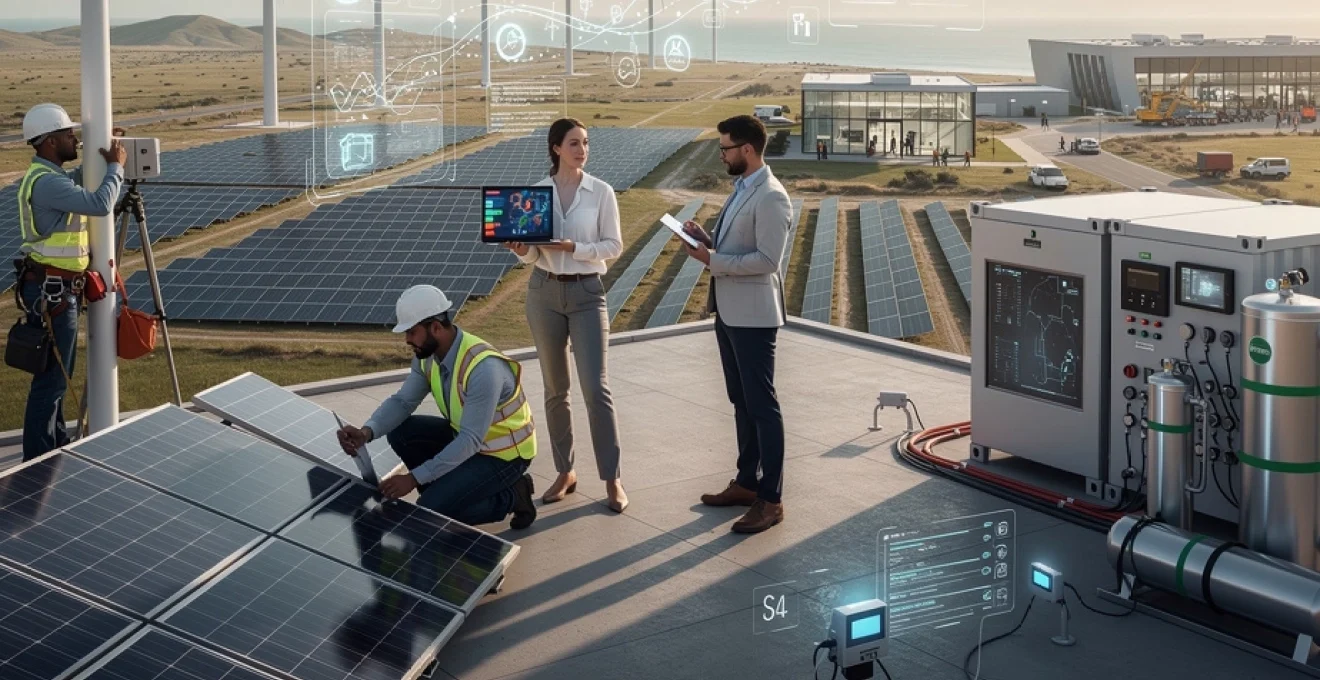
The global shift towards sustainable energy is creating a fundamental transformation in employment landscapes worldwide. As governments implement ambitious climate targets and corporations embrace net-zero commitments, the renewable energy sector has emerged as one of the fastest-growing job markets of the 21st century. This transition represents far more than simply replacing fossil fuel positions—it’s generating entirely new career pathways, requiring innovative skill sets, and establishing economic hubs in previously overlooked regions.
Current projections indicate that renewable energy employment could reach 43 million jobs globally by 2050, representing a threefold increase from today’s workforce. The International Renewable Energy Agency reports that the sector already employs 13.7 million people worldwide, with solar photovoltaic technology alone accounting for 4.9 million positions. What makes this growth particularly significant is its geographical distribution—nearly two-thirds of renewable energy jobs are concentrated in Asia, whilst Western markets are experiencing rapid expansion in specialised technical roles.
The acceleration isn’t merely about quantity; it’s fundamentally about quality and diversity of opportunities. From artificial intelligence specialists optimising wind farm performance to green hydrogen engineers designing industrial decarbonisation systems, the renewable sector demands interdisciplinary expertise that bridges traditional boundaries between engineering, data science, and environmental stewardship.
Global market expansion driving unprecedented renewable energy job creation
The renewable energy job market is experiencing exponential growth driven by unprecedented global investment and policy support. In 2023 alone, worldwide renewable energy capacity additions reached 346 gigawatts, marking the fastest expansion in two decades. This surge translates directly into employment opportunities across manufacturing, installation, operation, and maintenance sectors. The European Union’s Green Deal initiative has committed €1 trillion towards climate neutrality by 2050, whilst the United States’ Inflation Reduction Act allocated $370 billion specifically for clean energy investments.
Manufacturing represents the largest employment segment within renewable energy, accounting for approximately 60% of all positions. Solar panel production facilities are establishing operations across North America and Europe to reduce supply chain dependencies, creating thousands of high-skilled manufacturing jobs. Wind turbine component manufacturing similarly requires specialised expertise in materials engineering, precision machining, and quality assurance protocols.
The project development phase generates substantial temporary employment spikes, with large-scale installations requiring coordination between environmental consultants, civil engineers, electrical technicians, and construction specialists. A typical 500-megawatt solar farm employs between 1,200-1,500 workers during peak construction phases, whilst offshore wind installations can engage up to 2,000 specialists across marine operations, heavy lifting, and submarine cable laying.
Wind turbine technician positions growing 68% through 2031
Wind turbine technician roles represent the fastest-growing occupation in renewable energy, with employment projections indicating 68% expansion through 2031. These positions combine electrical expertise with mechanical aptitude, requiring professionals to maintain and repair turbines operating at heights exceeding 100 metres. The role demands proficiency in hydraulic systems, gearbox maintenance, and electrical diagnostics, with average salaries ranging from £35,000 to £55,000 annually depending on experience and geographic location.
Training programmes for wind technicians typically span 6-18 months, covering safety protocols, climbing techniques, and specialised equipment operation. Offshore wind technician positions command premium salaries due to marine environment challenges and extended deployment schedules. The expanding offshore wind sector along Europe’s coastlines and emerging American markets creates particularly attractive career prospects for technically-minded individuals seeking stable, well-compensated employment.
Solar photovoltaic installer roles experiencing 63% employment growth
Solar photovoltaic installer positions are expanding at 63% annually, reflecting the technology’s cost competitiveness and widespread adoption across residential, commercial, and utility sectors. These roles require electrical knowledge, roofing expertise, and system integration capabilities. Installation teams typically consist of lead installers earning £28,000-£42,000 annually, supported by apprentice-level positions offering excellent career progression opportunities.
The residential solar market particularly drives installer demand, as homeowners increasingly invest in rooftop systems to reduce electricity costs and enhance energy independence. Commercial installations require additional expertise in three-phase electrical systems and building compliance regulations. Utility-
scale solar projects, meanwhile, involve complex coordination with grid operators, structural engineers, and energy storage specialists to ensure reliable integration into the electricity network. As deployment scales up, we are also seeing more specialised roles emerge, such as solar design engineers, performance analysts, and O&M (operations and maintenance) technicians focused on maximising energy yield over a system’s 20–30 year lifetime.
Energy storage system engineers meeting grid modernisation demands
As variable renewable energy penetrates electricity systems, energy storage system engineers are becoming pivotal in maintaining grid stability. These professionals design, model, and commission battery energy storage systems (BESS) that can absorb surplus solar and wind power and discharge it when demand peaks. Their work spans selecting appropriate chemistries, sizing systems for specific use cases, and integrating storage into existing substation and transmission infrastructure.
Modern grid modernisation projects increasingly require engineers who understand both power systems engineering and advanced control algorithms. For example, large-scale lithium-ion projects in the UK and US now regularly exceed 100 megawatt-hours, requiring sophisticated dispatch strategies to participate in frequency response, capacity markets, and ancillary services. Energy storage system engineers therefore collaborate closely with software developers, market analysts, and utilities to ensure these assets deliver both technical and commercial value.
Career pathways into this niche often start in electrical or power engineering, followed by specialisation through postgraduate courses or industry certifications in battery technology and power systems. With BloombergNEF projecting global stationary storage capacity to multiply more than six-fold by 2030, demand for these engineers is expected to outstrip supply, making it an attractive route for those considering a transition from traditional generation roles.
Green hydrogen production specialists emerging in industrial sectors
Green hydrogen production specialists are rapidly emerging as key players in hard-to-abate sectors such as steel, chemicals, and heavy transport. Their focus lies in designing and operating electrolysers that use renewable electricity to split water into hydrogen and oxygen, producing a zero-carbon fuel. These roles demand a blend of process engineering, electrochemistry, and systems integration skills, as projects scale from pilot plants to gigawatt-scale industrial hubs.
Industrial clusters in regions like the North Sea basin, the US Gulf Coast, and the Middle East are investing billions into green hydrogen and e-fuels. Specialists in this field must navigate complex challenges: ensuring high utilisation rates of electrolysers, managing water sourcing and purification, and integrating hydrogen with existing pipelines and storage facilities. They also play a central role in safety case development, given hydrogen’s unique handling requirements compared with natural gas.
For professionals with backgrounds in petrochemicals, oil and gas processing, or industrial gases, green hydrogen offers a natural transition. Many of the core competencies—such as process control, safety management, and large-scale plant operations—remain relevant, while additional training in electrolysis technologies and renewable power markets completes the skill set. As governments roll out hydrogen strategies and incentives, we can expect to see “green hydrogen engineer” and “power-to-X project manager” become mainstream job titles.
Technical skills evolution transforming traditional energy workforce
The rapid expansion of renewable energies is not only creating new jobs; it is reshaping the technical foundation of the entire energy workforce. Traditional roles in thermal generation, transmission, and distribution are evolving to incorporate digitalisation, automation, and advanced analytics. Instead of a sharp divide between “old” and “new” energy, we increasingly see a continuum where legacy expertise in power systems is enhanced by skills in software, data science, and controls engineering.
For many professionals, this transformation raises an important question: how do you remain relevant in a sector moving so quickly? The answer lies in embracing continuous upskilling and cross-disciplinary learning. Electricians learn to programme inverter settings, mechanical technicians become adept at interpreting sensor data, and control room operators gain fluency in cyber-physical security. In effect, the energy workforce is becoming more like the IT sector—highly dynamic, interconnected, and innovation-driven.
SCADA systems integration for smart grid operations
Supervisory Control and Data Acquisition (SCADA) systems have long been the backbone of grid operations, but the rise of distributed renewables is pushing them into a new era. Integration engineers are now tasked with connecting thousands of decentralised assets—solar farms, wind parks, battery systems, and demand response resources—into unified, real-time monitoring platforms. This requires expertise in communication protocols such as IEC 61850, Modbus, and DNP3, as well as robust cybersecurity practices.
Modern smart grids behave less like simple one-way pipelines and more like complex nervous systems, constantly receiving and responding to signals. SCADA specialists configure remote terminal units (RTUs), design human–machine interfaces (HMIs), and implement alarm management strategies so operators can act quickly when conditions change. In many utilities, these roles now overlap with IT and OT (operational technology) security, as grid infrastructure becomes a target for sophisticated cyber threats.
For technicians and engineers coming from conventional power plants, SCADA integration offers a clear progression path. Familiarity with legacy control systems can be leveraged while acquiring competencies in IP networking, data logging, and protocol gateways. Training in smart grid operations, often delivered in partnership with OEMs and specialist vendors, helps professionals move from maintaining a single plant to orchestrating entire fleets of distributed renewable assets.
Power electronics engineering in inverter technology
As the share of solar and wind grows, power electronics engineering has become central to how electricity is generated and delivered. Inverters function as the “translators” between variable DC output from PV arrays or batteries and the AC waveform of the grid. Power electronics engineers design these devices to handle high power levels, maintain grid stability, and comply with evolving grid codes that demand capabilities such as fault ride-through and reactive power support.
Think of inverters as the conductors of a large orchestra of renewables—if they are poorly designed or configured, the entire performance can fall out of sync. Engineers in this field work with wide bandgap semiconductors, thermal management solutions, and advanced control algorithms to maximise efficiency and reliability. They also collaborate with grid operators to ensure that inverters support frequency regulation and voltage control, functions once provided solely by large synchronous generators.
Demand for power electronics specialists spans manufacturers, EPC (engineering, procurement, and construction) contractors, and grid operators. Many universities and technical institutes now offer dedicated modules on inverter design and power conversion as part of electrical engineering programmes. For professionals already working in drives, UPS systems, or industrial automation, transitioning into renewable inverter technology can be a logical and rewarding career move.
Predictive maintenance using IoT sensors and machine learning
Predictive maintenance is transforming how we operate wind farms, solar parks, and battery installations. Instead of waiting for equipment to fail, operators increasingly rely on IoT sensors and machine learning algorithms to anticipate issues before they cause downtime. Vibration sensors on turbine gearboxes, thermal cameras on inverters, and environmental sensors across sites all feed into central analytics platforms that flag anomalies and recommend interventions.
You can think of this approach as similar to a modern car’s onboard diagnostics, constantly assessing performance and alerting you to problems early. In the renewable context, data scientists and reliability engineers collaborate to build models that detect subtle patterns in large data sets, such as early signs of blade damage or cell degradation. Field technicians then receive targeted work orders, enabling them to focus on components most at risk rather than performing generic, time-based maintenance.
This shift is creating hybrid roles such as “data-enabled maintenance engineer” or “digital asset performance specialist.” Professionals with hands-on experience in turbines or PV systems who are willing to learn basic data analytics tools—such as Python, SQL, or specialised condition monitoring software—can significantly increase their value in the job market. Companies that successfully adopt predictive maintenance often see substantial reductions in unplanned outages and maintenance costs, reinforcing the business case for these green jobs of the future.
Battery management systems design for utility-scale storage
Battery Management Systems (BMS) are the brains behind every utility-scale energy storage project. They monitor cell voltages, temperatures, and state of charge, and they ensure safe, efficient operation under a wide range of grid conditions. BMS engineers develop both hardware and embedded software that can respond in milliseconds to prevent overcharging, deep discharging, or thermal runaway events.
As storage systems scale from a few kilowatt-hours to hundreds of megawatt-hours, BMS design becomes more complex. Engineers must manage cell balancing across thousands of modules, coordinate with higher-level energy management systems (EMS), and comply with stringent grid codes and safety standards. They also need to consider degradation models so that operators can forecast capacity fade and plan augmentation strategies over a project’s lifetime.
For electronics engineers and embedded systems developers, BMS design offers a high-impact entry point into renewable energy. The work is intellectually challenging, sitting at the intersection of electrochemistry, control theory, and software engineering. With many countries introducing incentives for battery storage and vehicle-to-grid integration, skills in BMS development are likely to remain in strong demand for years to come.
Corporate sustainability mandates creating new professional pathways
Beyond the power sector, corporate sustainability mandates are catalysing a wave of new professional roles linked to renewable energies. Multinational companies are committing to 100% renewable electricity through initiatives like RE100, embedding science-based targets, and publishing detailed ESG (environmental, social, and governance) reports. Meeting these commitments requires specialised staff who can navigate renewable energy procurement, carbon accounting, and stakeholder engagement.
New positions such as renewable energy procurement manager, corporate PPAs analyst, and climate risk officer are emerging across finance, manufacturing, technology, and retail. These professionals evaluate options such as virtual power purchase agreements, onsite solar installations, and green tariffs, while ensuring compliance with evolving regulatory frameworks. In many organisations, sustainability teams now sit alongside core business functions, influencing capital allocation and long-term strategy.
For those with backgrounds in finance, law, or corporate strategy, this trend opens pathways into energy without requiring a purely technical profile. Skills in contract negotiation, risk assessment, and stakeholder communication are highly transferable. As investors and customers increasingly scrutinise sustainability performance, we can expect these “green collar” roles to become as commonplace as traditional functions in finance or marketing.
Geographic employment hotspots reshaping regional labour markets
The rise of renewable energies is also reshaping where jobs are located, creating new employment hotspots and revitalising regional economies. Areas with strong solar resources, consistent wind patterns, or existing industrial infrastructure are attracting significant investment. This spatial reconfiguration of the energy workforce offers new opportunities, but also raises questions: how can communities ensure they benefit from the green transition, and what support is available for workers relocating or reskilling?
Regional development agencies, governments, and industry consortia are increasingly coordinating to align infrastructure upgrades, training programmes, and local content requirements. In many cases, regions that once depended on coal, oil, or heavy industry are leveraging their engineering heritage and grid connections to become renewable powerhouses. The result is a new geography of work, where clean energy clusters form the backbone of local economic strategies.
Texas wind corridor generating 25,000 direct jobs annually
The Texas wind corridor illustrates how renewable energy can transform a regional labour market. With some of the best onshore wind resources in North America and extensive transmission infrastructure, Texas has become a global leader in installed wind capacity. This concentration of assets supports an estimated 25,000 direct jobs annually in construction, operations and maintenance, manufacturing, and logistics.
Local communities benefit not only from turbine technician and engineering roles but also from indirect employment in hospitality, transportation, and component supply. Rural counties that host wind farms often receive substantial tax revenues and land lease payments, supporting schools, healthcare facilities, and public services. For many landowners, leasing a portion of their property for turbines has become a stable income stream that complements traditional agriculture.
As grid upgrades and hybrid projects (combining wind, solar, and storage) continue, the Texas corridor provides a blueprint for other regions seeking to build renewable energy clusters. Key lessons include early investment in transmission, streamlined permitting, and strong partnerships between developers, communities, and training providers. For job seekers, the area offers a wide range of roles, from entry-level technical positions to senior project management and grid planning posts.
California solar manufacturing renaissance in fremont and sacramento
California’s push towards a decarbonised economy has sparked a solar manufacturing renaissance, particularly around hubs such as Fremont and Sacramento. Spurred by federal incentives, state policies, and corporate demand for low-carbon supply chains, several manufacturers are expanding or establishing PV module and component facilities in these areas. This is reversing a decade-long trend of offshoring and bringing high-value manufacturing jobs back to US soil.
In Fremont, for instance, advanced manufacturing plants are deploying automation, robotics, and quality control systems to produce high-efficiency modules at scale. These factories employ process engineers, materials scientists, line operators, and quality assurance specialists, often drawing from the region’s strong semiconductor and electronics talent pool. Sacramento, with its strategic location and transport links, is emerging as a logistics and assembly hub for utility-scale solar projects across the western states.
The ripple effects of this manufacturing resurgence are significant. Local suppliers providing glass, aluminium frames, junction boxes, and packaging materials are seeing increased demand, while technical colleges are updating curricula to include solar manufacturing and quality management. For individuals with experience in electronics, automotive, or other precision industries, these hubs offer a compelling opportunity to pivot into renewable energy while staying within an advanced manufacturing environment.
Offshore wind development zones along eastern seaboard states
Offshore wind development zones along the Eastern Seaboard of the United States are rapidly becoming focal points for green job creation. Lease areas off the coasts of states such as New York, New Jersey, Massachusetts, and Virginia are expected to host tens of gigawatts of offshore wind capacity over the coming decades. Building and operating these projects will require a highly skilled workforce spanning marine engineering, vessel operations, subsea cabling, port logistics, and environmental monitoring.
Unlike many onshore renewables, offshore wind relies heavily on coastal infrastructure upgrades. Ports are being redesigned to handle large turbine components, while new facilities are emerging to manufacture blades, nacelles, and foundations. This is creating clusters of employment around specific harbours and shipyards, often revitalising areas previously reliant on declining industrial or maritime activities.
For workers with backgrounds in offshore oil and gas, shipbuilding, or naval engineering, the transition to offshore wind can be relatively smooth. Many competencies—such as working at sea, managing complex logistics, and adhering to rigorous safety regimes—are directly applicable. Training initiatives focused on GWO (Global Wind Organisation) certifications and offshore safety are helping to formalise this transfer of skills, ensuring that coastal communities can play a leading role in the clean energy transition.
Educational infrastructure adapting to industry workforce requirements
As renewable energy jobs multiply, educational institutions are racing to keep pace with evolving workforce requirements. Universities, technical colleges, and vocational training providers are redesigning programmes to align with industry needs, often in direct partnership with employers. Instead of purely theoretical curricula, we increasingly see practice-oriented modules that combine classroom learning with hands-on experience in labs, test fields, or real project sites.
New degrees and certificates in areas such as renewable energy engineering, sustainable power systems, and hydrogen technologies are complementing traditional engineering and science disciplines. At the same time, micro-credentials and short courses are gaining traction, allowing mid-career professionals to upskill in targeted areas like battery storage, power system modelling, or carbon accounting. This flexibility is crucial for a sector where technologies and regulations can change faster than conventional academic cycles.
Apprenticeship schemes and net-zero academies are also playing an important role. By combining paid on-the-job training with structured learning, they lower barriers to entry for school leavers, career switchers, and underrepresented groups. For example, programmes dedicated to training wind turbine technicians or solar installers can be completed within 12–24 months, providing a relatively quick route into stable, well-paid employment. The challenge—and opportunity—for policymakers is to scale these initiatives and ensure they are accessible across regions and demographics.
Economic multiplier effects across supply chain ecosystems
One of the most compelling reasons why jobs in renewable energies are shaping the future of work lies in their powerful economic multiplier effects. Every new wind farm, solar park, or hydrogen hub triggers activity far beyond the project fence line, stimulating demand across entire supply chain ecosystems. Steel fabricators, electrical cable manufacturers, transport companies, software developers, and professional services firms all benefit from renewable investments, creating layers of indirect and induced employment.
Studies by organisations such as IRENA and the International Energy Agency consistently show that every million dollars invested in renewables generates more jobs than the same amount invested in fossil fuels. This is partly because clean energy projects are more labour-intensive during construction and installation phases, and partly because they rely on diverse, decentralised supply chains. For local economies, particularly those undergoing industrial transition, attracting renewable energy projects can therefore act as a catalyst for broader regeneration.
For businesses and workers alike, the message is clear: engaging with renewable energy is no longer a niche sustainability choice, but a mainstream economic strategy. Whether you are an engineer, technician, analyst, policymaker, or entrepreneur, there is likely a role for you somewhere within this expanding ecosystem. By understanding where the strongest multiplier effects occur—such as component manufacturing, digital services, or grid upgrades—you can position yourself or your organisation to thrive in a labour market increasingly defined by clean, resilient, and innovative energy systems.